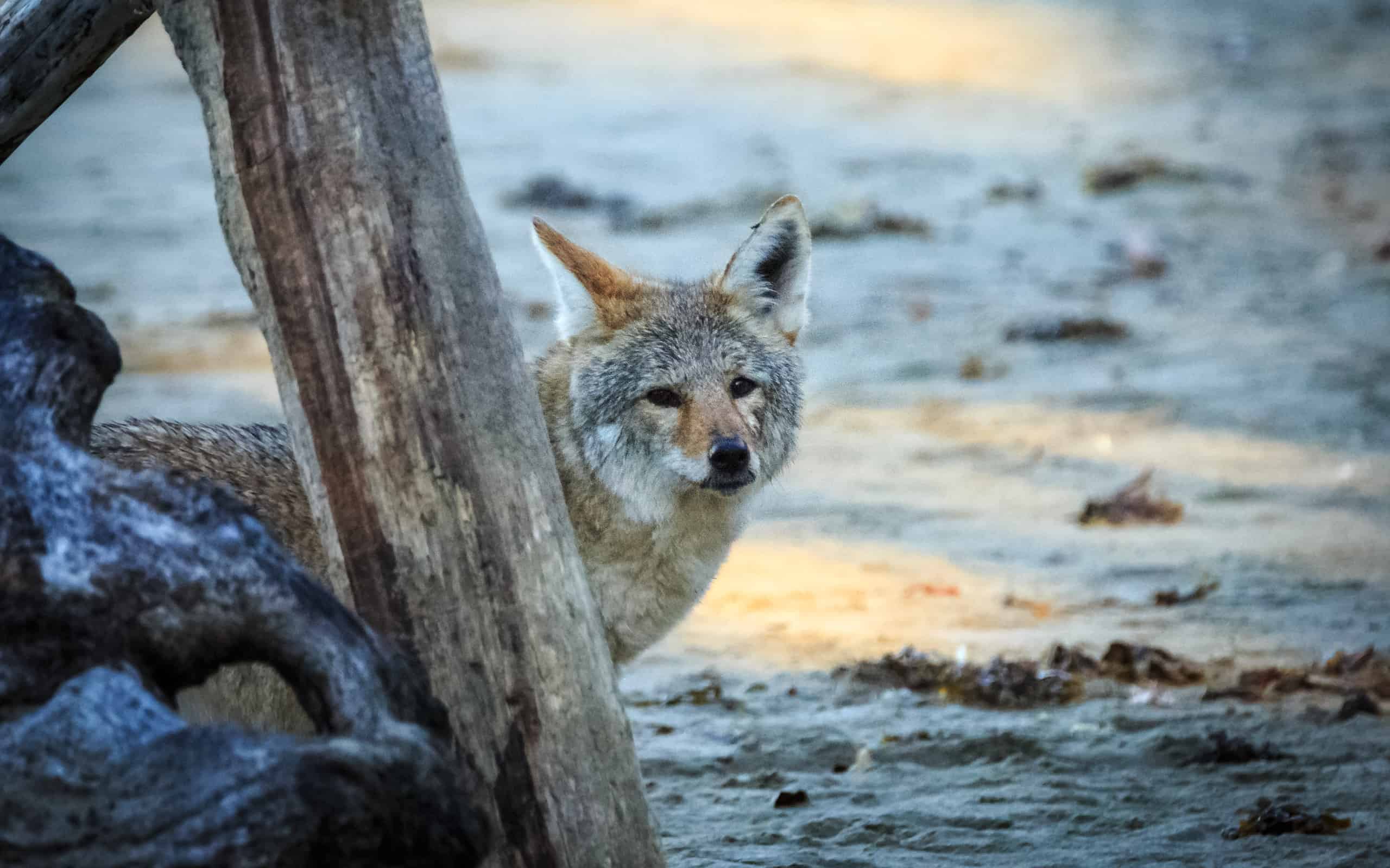
Biologists were sure they knew where he came from. The DNA disagreed.Why would a coyote risk a swim that defeated Alcatraz's most desperate prisoners?Thousands of nesting seabirds and a plan to remove him put the clock on his visit. What did the park intend to do?Months of cameras and recorders watched the island for him. What they caught is the final twist.
On Jan. 11, 2026, a visitor to Alcatraz filmed a coyote paddling through San Francisco Bay at sunset and struggling onto the island’s rocky southern shore, shaking and worn out, Live Science reported. No coyote had been documented there since the National Park Service took over the island in 1972, according to SFGATE. After a visitor photographed him on Jan. 24, he was never seen again, the National Park Service said.
Scientists used that scat to trace his route. On May 4, the agency announced that DNA from it matched him to the coyotes of Angel Island State Park, where he likely started his swim. Angel Island is about 2 miles from Alcatraz, and biologists had guessed he came from San Francisco, a little over 1 mile away, the Associated Press reported.
How did scientists trace the swim?
Rebecca Husson, a visitor on a morning tour of the island, took the Jan. 24 photograph, the Associated Press reported. In the days after, park biologists found fresh tracks and scat, and they sent the scat to the Veterinary Genetics Laboratory at UC Davis, the National Park Service said. The DNA showed the coyote was a male.
“Three distinct coyote populations could have been the source of the Alcatraz coyote, San Francisco, Southern Marin, and Angel Island,” said Dr. Ben Sacks of UC Davis. “Our lab was able to take the DNA sample and match it to a coyote previously sampled from the Angel Island population.”
The match surprised park service wildlife ecologist Bill Merkle, whose team had assumed the coyote swam from San Francisco because the distance is much shorter. “We couldn’t help being impressed by his accomplishment in making it to Alcatraz,” he said.
Nobody saw where he set out: the January videos begin with the coyote already in the water, Live Science reported. Coyotes have lived on Angel Island since 2017.
Why would a coyote swim 2 miles?
Camilla Fox, founder and executive director of the nonprofit Project Coyote, told the Associated Press the coyote likely left his home base in search of a mate or new territory to defend. Coyote mating season runs from January to March, according to Live Science. Solitary coyotes are typically young animals, between about 6 months and 2 years old, looking to join another group or claim their own territory.
Stanley Gehrt, a professor of wildlife ecology at The Ohio State University, told Live Science he has watched coyotes swim across lakes in the Chicago region. “In some cases, they prefer to swim across a lake rather than run around it,” Gehrt said. Those swims usually cover a few hundred yards in relatively calm water. He has also recorded a dispersing coyote that traveled more than 150 miles across southern Ohio and crossed the Ohio River.
A coyote weighs 25 to 35 pounds and stands 16 to 20 inches high at the shoulder, according to Yellowstone National Park.
How dangerous is that water?
Alcatraz sits in the middle of a cold estuary with strong currents, Live Science reported. When the island was a federal prison, 36 men attempted 14 separate escapes, and nearly all were caught or didn’t survive the cold, swift current, the Associated Press reported.
“We have never, ever heard such a story of a coyote making such a long journey in a pretty challenging ocean current,” Fox said.
“He looked like a drowned rat when he ended up on the island, and when we saw him he looked healthy and so beautiful,” Husson told the AP. “He looked like he had been eating well.”
What did the park plan to do with him?
Park staff found the carcass of at least one bird on the island, SFGATE reported. Thousands of seabirds descend on Alcatraz in February to nest. Joshua Winchell, a national park ranger and spokesperson, said plans were underway to “humanely trap and remove” the coyote if he didn’t leave on his own. Staff also doubted he could survive long on a 22-acre island with no cover and no fresh water.
The National Park Service said staff were prepared to relocate him to more suitable habitat within Golden Gate National Recreation Area.
Where is he now?
Trail cameras and audio recorders ran on Alcatraz for months and never captured him, according to the National Park Service. There’s no evidence he’s still on the island, and no remains have been found.
“We don’t know what happened to the coyote,” Merkle said. “But he proved himself an expert swimmer to get to Alcatraz, and I hope he made a successful swim back home to Angel Island.”
Thank you for reading! Have some feedback for us?
Thank you for your feedback!
We appreciate your help in improving our content.
Our editorial team will review your suggestions and make any necessary updates.
There was an error submitting your feedback. Please try again.