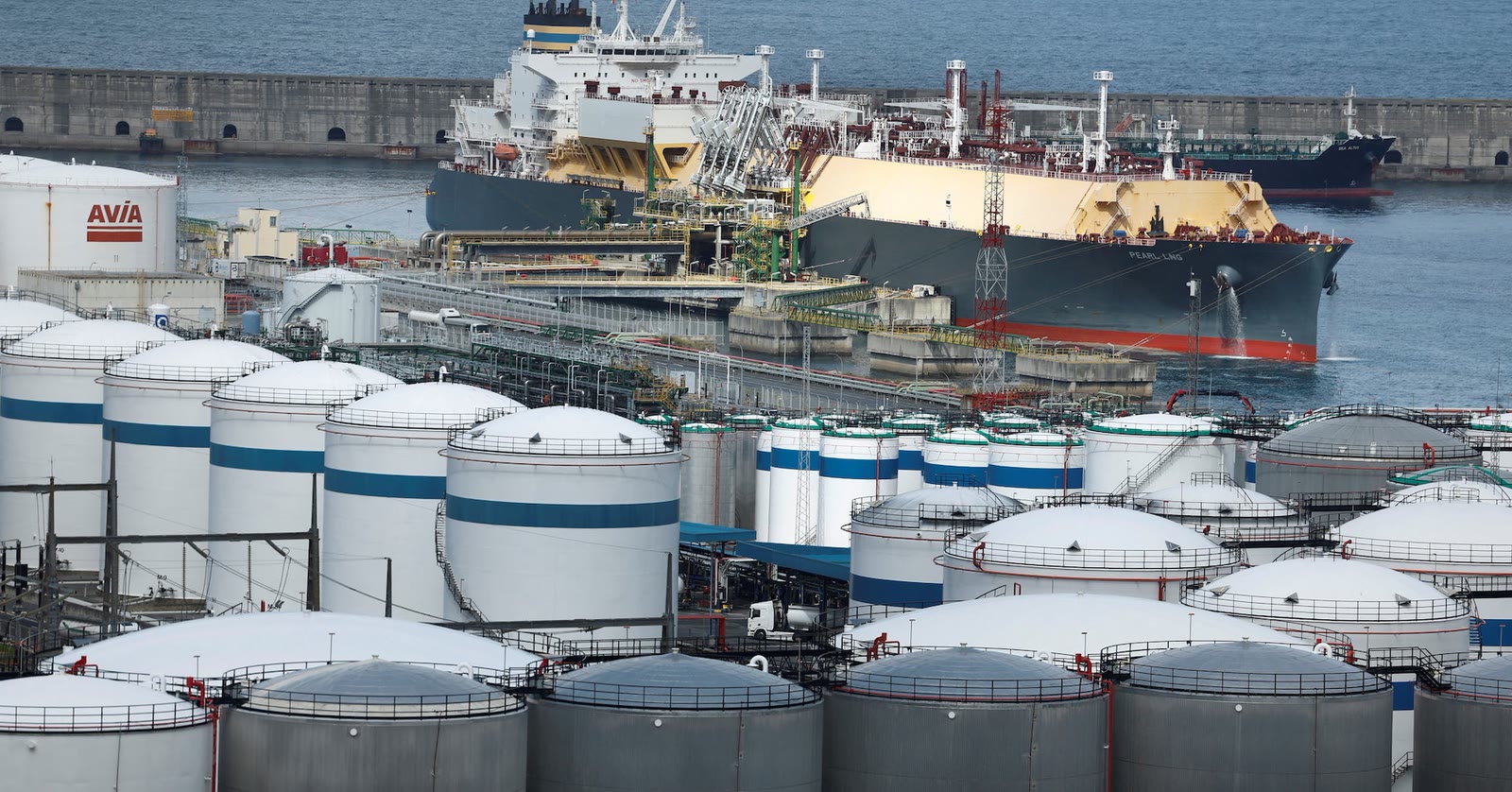
Maltese flagged liquid natural gas tanker Pearl LNG sits alongside gas storage facilities, following arrival from the US port of Ingleside, at Bilbao port, northern Spain, March 27, 2026. REUTERS/Vincent West/File Photo Purchase Licensing Rights, opens new tab
Nov 23 (Reuters) - Energy-efficiency measures have saved the European Union around €120 billion ($132 billion) in gas and oil import costs since Russia invaded Ukraine in 2022, the European Commission said on Monday, arguing energy savings must go hand-in-hand with electrification as the bloc transitions away from fossil fuels.
The savings estimate, covering the period from February 2022 to mid-2026, reflects the impact of measures introduced between 2015 and 2021, Commission spokesperson Anna-Kaisa Itkonen told Reuters.
The Reuters Power Up newsletter by columnist Ron Bousso provides everything you need to know about the global energy industry. Sign up here.
The Commission presented its Electrification Action Plan for Europe in July, aiming to raise electricity's share of final energy consumption to 46% by 2040 from around 23% today. Greater electrification could help reduce fossil-fuel dependence, lower energy costs and improve Europe's competitiveness, it argued.
Last week, however, environmental groups warned that delays to the planned EU energy-efficiency and energy-labelling rules could undermine the bloc's strategy, and electrification alone would not be enough to meet the EU's climate and energy goals.
While Itkonen did not provide any updates on the timing of upcoming proposals, she said energy efficiency played an important role. "First of all, to reduce the overall energy demand while providing same or more energy services. Second, it contributes to security of energy supply."
Efficiency measures complemented policies aimed at increasing clean electricity use and replacing fossil-fuel equipment with renewable-energy technologies such as heat pumps, the Commission added.
Legislation including the Energy Efficiency Directive, Energy Performance of Buildings Directive and Renewable Energy Directive supported both greater electrification and lower overall energy consumption, it said.
Energy-efficiency measures saved an estimated 195 million metric tons of oil equivalent between 2005 and 2024, roughly equal to the combined gross inland energy consumption of Italy and Belgium in 2024, according to the Commission.
($1 = 0.9103 euros)
Reporting by Cian Muenster; Editing by Jonathan Ananda
Our Standards: The Thomson Reuters Trust Principles., opens new tab
Cian Münster is a Reuters reporter covering politics, business and regulation across Germany, Austria, Switzerland and Australia, with a particular focus on European Union policymaking and its impact on industries and markets. His reporting examines the intersection of politics, economics and regulation, drawing on a strong interest in international affairs, democracy and press freedom. He studied International Relations and Conflict Studies and has a multinational background.