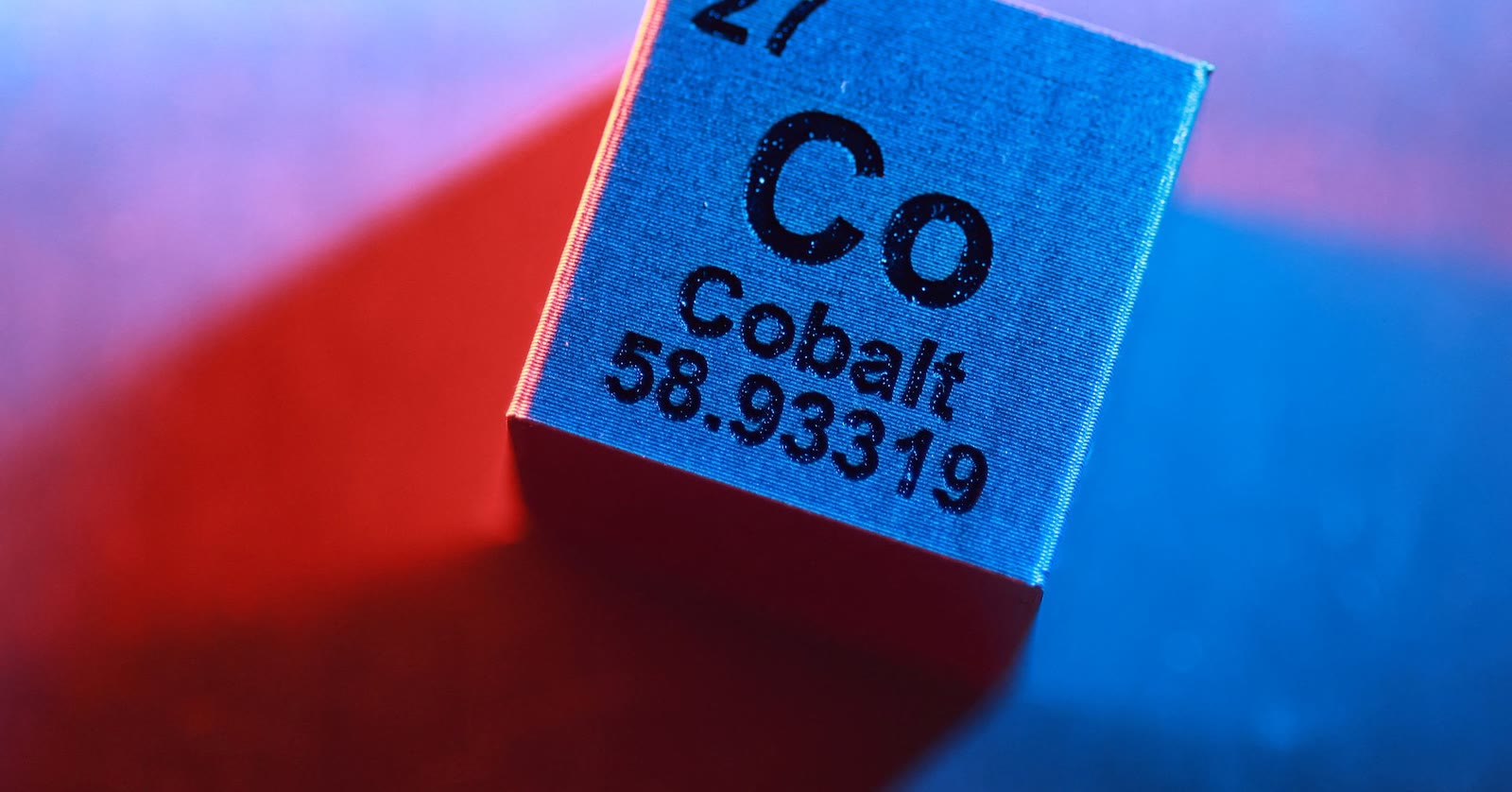
A block with the symbol, atomic number and mass number of Cobalt (Co) element in this illustration taken February 6, 2026. REUTERS/Dado Ruvic/Illustration Purchase Licensing Rights, opens new tab
DAKAR, Nov 23 (Reuters) - Democratic Republic of Congo will suspend cobalt exports from November 30 until further notice, its strategic minerals regulator said on Monday, as the world's top producer seeks to tackle oversupply, weak prices and rising inventories.
The suspension will cover all cobalt produced in Congo, from industrial mines to artisanal operations, and will remain in place until ARECOMS formally lifts it, the regulator said in a statement.
The Reuters Daily Briefing newsletter provides all the news you need to start your day. Sign up here.
"The measure is intended to address a persistent imbalance in the cobalt market caused by weak demand, rising inventories and excess supply."
The move marks the second time since April 2025 that Congo has halted cobalt exports, as it seeks to curb oversupply and support prices by tightening supplies to the global market.
Cobalt prices came under renewed pressure this year after a brief recovery from record lows, as exports released under Congo's quota system added supply to a market already grappling with weak battery demand and a persistent surplus.
In the statement, ARECOMS said cobalt prices had fallen significantly and persistently since mid-year due to slowing global consumption, rising inventories and speculative trading.
The suspension period would be used to adjust ARECOMS' quota-allocation system in an effort to better align exports with global demand and contribute to a lasting rebalancing of the cobalt market, it said
The regulator said it would review the measure four months after it takes effect, but stressed that the evaluation would not automatically lead to a resumption of exports.
Any restart would require a separate decision setting export volumes, quota allocations and applicable conditions, it added.
Reporting by Stanis Bujakera; Editing by Clement Bennerot, Ayen Deng Bior, Emelia Sithole-Matarise and Susan Fenton
Our Standards: The Thomson Reuters Trust Principles., opens new tab