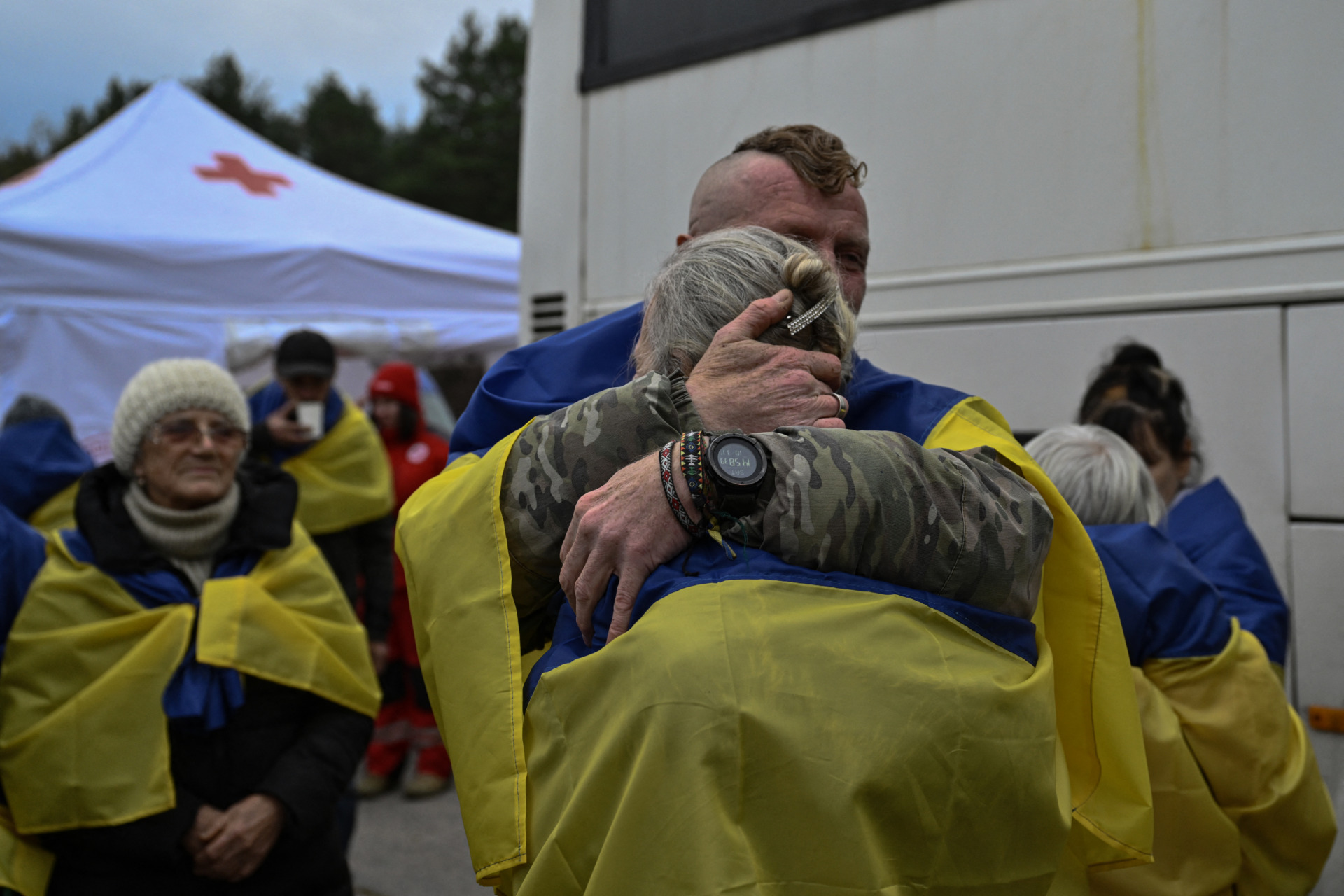
The recent humanitarian operation in southern Ukraine to secure a temporary ceasefire, deliver aid, and evacuate civilians from the Russian-occupied city of Oleshky drew international attention, in significant part due to the involvement of U.S. First Lady Melania Trump as a broker of the deal. In recognition of her role, Ukrainian President Volodymyr Zelenskyy awarded her the “Order of Princess Olga” for her contribution to humanitarian efforts in Ukraine.
The operation undoubtedly saved hundreds of lives. Yet the international attention it received should not obscure the questions it raises: what guarantees the safety of civilians and humanitarian personnel during such missions? Who monitors compliance with the arrangements? And can political agreements, however high-profile their brokers, provide a reliable basis for humanitarian action in the context of an ongoing armed conflict?
Oleshky is therefore not simply a story of a humanitarian mission, but a test of whether ad hoc political arrangements can provide lasting protection to civilians, and what must change to ensure that humanitarian access is governed by law, not by political convenience.
A Humanitarian Crisis and a War of Narratives
Oleshky, in southern Ukraine’s Kherson region, lies on the left (eastern) bank of the Dnipro River, opposite the city of Kherson, and approximately 90 kilometers north of Crimea. The town first came to international attention on June 6, 2023, when the Kakhovka Hydroelectric Power Plant (HPP) and dam on the Dnipro River was blown up, flooding 620 square kilometers (239 square miles) of that region and three others for an estimated $14 billion in losses. Before the disaster, the town had a population of approximately 16,000. An investigation by Truth Hounds and Project Expedite Justice concluded that Russian forces had deliberately detonated explosives inside the dam. On the right (western) bank of the Dnipro River, which remained under Ukrainian government control, almost 100 people were killed, injured, or reported missing. Approximately 4,000 more people had to be evacuated in an emergency operation. Meanwhile, the Russian Federation continues to cover up information about thousands of people affected in the occupied areas and obstructs access for independent monitoring missions.
A post-disaster needs assessment jointly prepared by the Government of Ukraine and the United Nations documented the catastrophic impact of the Kakhovka Dam’s destruction and the resulting surge in humanitarian needs. Ongoing hostilities exacerbated conditions. Constant shelling by Russian forces and the resulting disruptions to electricity, water, and heating supplies severely curtailed access to medical care. Environmental damage worsened, mine contamination spread, and essential services were disrupted. The situation was intensified by a lack of direct routes between occupied territory and areas under Ukrainian government control, Russian efforts to prevent civilian evacuations, and Russia’s use of drones to deliberately hover over and target civilians, picking them off opportunistically, a tactic that Ukraine refers to critically as “human safari.”
Since early 2026, reports have painted an increasingly alarming picture of conditions in Oleshky and neighboring settlements under Russian occupation. By this time, Oleshky had effectively become a frontline town, where movement in and out was extremely dangerous. In late December 2025, the Russian occupation administration halted food deliveries, citing the threat of Ukrainian drone strikes. As a result, residents became increasingly isolated, with no safe evacuation routes. Electricity, gas, and water supplies had also been cut off, while food and medicine were in critically short supply. Humanitarian aid arrived only sporadically and was distributed exclusively to residents holding Russian passports imposed by the occupation authorities. Residents faced starvation, while constant shelling made it impossible to bury the dead. According to local authorities, between 1,500 and 2,000 people remained in Oleshky, most of them older persons and people with reduced mobility, alongside 47 children. Across Oleshky and neighboring settlements, the number of people trapped reached 6,000, including 182 children.
In March 2026, Ukraine appealed to Russia and the International Committee of the Red Cross (ICRC) to establish a humanitarian corridor for the safe evacuation of civilians from Oleshky and neighboring settlements, and to ensure compliance with the rules of international humanitarian law (IHL, the laws of war) that require protection of civilians. The appeal yielded no tangible results. Instead, the occupation authorities dismissed reports of a humanitarian catastrophe in Oleshky as “lying Kyiv propaganda.” In May 2026, the Russian authorities opened a local branch of Yunarmiya, Russia’s nationwide militarized children’s movement, in Oleshky. The move appeared intended to reinforce the narrative that the situation in the occupied municipality was under control. It also laid bare Russia’s priorities: the militarization of children taking precedence over their survival, safety, and development.
The Ukrainian government’s head of the Oleshky military administration, located nearby in Ukrainian territory, in a June 2026 interview urged U.N. mediators, the ICRC, and the Organization for Security and Co-operation in Europe (OSCE) to seek a humanitarian corridor and safety guarantees for civilians. In September and October, Ukraine reiterated these appeals at major international forums in New York, Vienna, and Warsaw. Pope Leo XIV also personally called Russian President Vladimir Putin to seek his assistance in saving the people of Oleshky.
A structured content analysis conducted by the Regional Center for Human Rights (where I work) examined 439 distinct Russian statements on Oleshky issued between May 2025 and October 2026. The findings, as yet unpublished, reveal a clear shift in Russia’s messaging: from concealing and denying the humanitarian crisis to gradually acknowledging its severity while shifting the blame onto Ukraine. This shift culminated on Sept. 30, when the Russian side claimed that the “Kyiv regime” was planning to stage “Bucha 2.0” in Oleshky, a reference to false Russian allegations that war crimes it apparently committed in the city of Bucha near Kyiv in April 2022 was a “fabricated genocide.” Russian officials took their claim to international forums, including the OSCE and the U.N. in Geneva and in New York, with accusations that international organizations were failing to act on what they now acknowledged was a humanitarian crisis (while trying to shift the blame for the conditions onto Ukraine, in a head-spinning case of gaslighting). On Oct. 23, the day Melania Trump announced that Russia and Ukraine had reached an agreement on a temporary ceasefire in Oleshky, Russia’s messaging shifted once again. In communications about the rescue and evacuation of civilians, Russian officials praised U.S. mediation, and promoted an exaggerated picture of pro-Russian sentiment among local residents.
The Oleshky Deal
The U.S. First Lady’s Oct. 23 announcement said the temporary ceasefire would allow humanitarian aid to enter and civilians to be evacuated. Preparations for the mission, initiated by Ukraine, had begun in September. At the operational level, Mark Beckman, a senior adviser specializing in marketing and media, represented the Office of the U.S. First Lady. Commissioner for Human Rights Yana Lantratova represented Russia. (Notably, Lantratova was officially notified by Ukraine’s Office of the Prosecutor General in March 2024 that she was under investigation for her role in the unlawful deportation of two children from the occupied Kherson region.)
Ukraine and Russia agreed to a ceasefire of almost six days, starting on Oct. 29. The arrangements covered road clearance and demining, access to residential buildings, the delivery of humanitarian aid, and the evacuation of civilians to territory controlled by either Ukraine or Russia, including Russian-occupied areas. The agreement was limited to the city of Oleshky and envisaged the evacuation of approximately 750 people, prioritizing especially older persons, people with reduced mobility, and families with children. Neither side has disclosed how many people were evacuated to Ukraine and how many were taken to Russia, citing the need to “avoid politicizing” the operation. The mission also included the recovery and repatriation of the bodies of civilians and military personnel, including the removal of bodies from the local morgue.
Under the agreement, the ceasefire and the safe, unconditional passage of civilians to Ukrainian-controlled territory were to be secured through the presence on the ground of both countries’ ombudspersons, alongside journalists from Ukraine, Russia, and the United States. The First Lady’s Office acted as the depositary, guarantor, and monitoring body for the arrangements. According to public statements by participants in the negotiations, the agreement existed in Ukrainian and Russian versions, which reportedly differed in their wording concerning the status of the occupied territories. One representative from each side was tasked with monitoring compliance with the restrictions on bringing military equipment into the area and redeploying troops. Beckman stated that neither Ukraine nor Russia had accepted the U.N. or the ICRC to serve as observers, and that they did not give reasons and also wanted to keep actual monitoring arrangements confidential for security reasons. The reasons for Russia and Ukraine objecting to outside observers may well have differed; Russia has consistently refused to grant independent organizations access to occupied territories. Nor was any mention made of Ukraine’s earlier efforts to involve these organizations. However, U.N. agencies were eventually granted access and provided assistance to evacuees once they returned to Ukrainian-controlled territory.
On Oct. 30, 2026, as part of the mission, 17 buses with a combined capacity of approximately 500 people departed from occupied Oleshky towards Ukrainian-controlled territory. An additional four buses, with a combined capacity of around 100 people, headed towards Russia. People from neighboring settlements were also picked up along the evacuation routes. Humanitarian aid was delivered to Oleshky for residents who, for various reasons, were unable to leave. Ukraine and Russia also announced plans to organize similar humanitarian operations in the city at least once a month.
The temporary ceasefire also enabled the evacuation of 145 adults and 22 children and repatriation of bodies from the Ukrainian-controlled right bank of the Kherson region. Despite reports that Russia may have used the humanitarian mission as cover for preparations for offensive operations, the ombudspersons of both countries and the U.S. First Lady have publicly maintained that the agreement was fully respected and that the model could be replicated in other regions. The composition of the humanitarian mission’s organizers and their links to members of the delegations participating in the U.S.-mediated peace process may indicate that the humanitarian track is being used to build confidence, de-escalate tensions, and advance peace negotiations, though the parties have refrained from commenting on this question.
Legal Assessment and the Way Forward
A key obstacle to replicating the Oleshky humanitarian mission may be an insufficient understanding of existing legal obligations concerning humanitarian access. This risks blurring the lines between military, political, and humanitarian activities, and turning humanitarian initiatives into instruments for gaining an advantage over the adversary. The civilian population will ultimately bear the cost — their chances of survival and being rescued will become increasingly uncertain. There’s also the risk that civilian lives may become bargaining chips in a political agenda.
Under international humanitarian law, the Russian Federation, as the occupying power, is responsible for, to the “fullest extent of the means available to it,” ensuring that the basic needs of the population under its control are met. Essential foodstuffs, medical supplies, and means of shelter must be made available without adverse distinction of any kind, including national origin or citizenship, while allowing prioritization on the basis of humanitarian need. If the occupying power cannot meet the humanitarian needs of the civilian population, it must agree to outside assistance and relief operations to provide the necessary assistance. The humanitarian crisis in Oleshky, where residents have reportedly faced prolonged shortages of food, medicine, water, and other essentials, raise serious concerns about Russia’s compliance with its obligations as an occupying power under IHL. Ukraine, for its part, also continues to bear positive obligations towards the population under the adversary’s control. These include measures to ensure respect for the rights of individuals in the occupied territory, and conduct toward civilians bound by IHL.
The U.S.-mediated humanitarian mission helped address civilian needs that the Russian Federation, as the occupying power, was legally obligated to address. International law prohibits the deliberate use of starvation of civilians as a method of warfare, including by obstructing humanitarian relief. It constitutes a war crime and, in certain circumstances, may also amount to a crime against humanity. A corollary of this prohibition is the obligation to respect and protect humanitarian personnel, subject to certain exceptions concerning military personnel involved in distributing humanitarian assistance.
Humanitarian relief personnel may include staff of the U.N. and the ICRC, members of national Red Cross and Red Crescent Societies, and personnel of other humanitarian organizations agreed by the parties. Although these actors were reportedly not involved in the Oleshky mission, their role could extend well beyond providing emergency assistance. They could coordinate and organize ongoing relief efforts and civilian evacuations, provide the parties to the conflict with financial, technical and expert support, monitor compliance with humanitarian arrangements, and perform other related functions. U.N. personnel engaged in humanitarian assistance enjoy special protection under the Convention on the Safety of United Nations Personnel. In practice, the Office of the U.S. First Lady exercised some diplomatic functions and facilitated humanitarian arrangements, but these activities alone did not confer the full rights and responsibilities of a protecting power, which requires designation and acceptance under the relevant legal framework.
Thus, those who took part in the Oleshky humanitarian operation did not enjoy protection comparable to that afforded to representatives of the U.N., the ICRC, or a protecting power. In practice, their safety and ability to carry out the mission rested entirely on an arrangement between the Ukrainian and Russian ombudspersons, brokered by the United States. This was a political understanding, not a legally binding agreement. Given Ukraine’s well-founded distrust of Russia and serious doubts about its willingness to honor its commitments, the presence of U.S. citizens alone cannot provide ironclad security guarantees, as Ukrainian officials have previously emphasized. The experience of the Budapest Memorandum, which provided security assurances but failed to prevent Russia’s aggression, further raises questions about whether this model of humanitarian operation should be replicated without legally binding and enforceable instruments.
Since 2014, Russia has pursued a pattern of deliberately creating humanitarian crises, undermining Ukrainian and international relief efforts, resorting to perfidy during agreed rescue operations (for example, by exploiting assurances of safe passage to carry out attacks), detaining personnel of international organizations on fabricated charges, and using propaganda to portray itself as the sole, genuine “humanitarian.” Despite this pattern of conduct, documented in Debaltseve, Volnovakha, Mariupol, and numerous other locations, the Russian Federation has yet to be held accountable for these violations and its obstruction of humanitarian efforts.
This disregard for international mechanisms and personnel is also reflected in Russia’s continued detention of international monitors. OSCE staff members Dmytro Shabanov, Maksym Petrov, and Vadym Golda remain imprisoned in Russia. Whatever practical value this approach may have, journalists, politicians, and other public figures should never be the sole guarantors of humanitarian missions. The real guarantee of their success lies not in the individuals involved, but in the mandates they represent; not in high-profile political statements, but in international agreements that clearly establish accountability for non-compliance.
From a Humanitarian Mission to Lasting Protection
Despite its shortcomings, the humanitarian mission in Oleshky saved hundreds of lives. It is therefore understandable that those involved have been widely praised as humanitarian actors and peacemakers. Both sides have begun floating ideas for further cooperation through a “humanitarian track.” These include building on the 34 Ukrainian children already returned from Russian control with Melania Trump’s involvement, extending efforts to settlements neighboring Oleshky and other regions facing acute humanitarian needs, establishing new mechanisms for the return of unlawfully detained civilians, and arranging joint visits by the Ukrainian and Russian ombudspersons to places of detention.
The agenda should go further. It could include the repatriation of dozens of teenagers and women convicted in Russia on politically motivated charges, as well as Russian disclosure about missing persons, namely the more than 20,651 Ukrainian children abducted by Russia. The Oleshky mission could also provide a starting point for a permanent mechanism to address humanitarian crises in occupied communities. Such a mechanism should go beyond delivering aid and evacuating civilians to enable independent assessments of civilian needs and ongoing monitoring of conditions for those who choose to stay.
The clearest sign that Russia is genuinely prepared to engage in good-faith humanitarian dialogue would be to open occupied territories to independent organizations, including the U.N., the ICRC, and the OSCE, and grant them full, continuous, and unhindered access to Ukrainian civilians under Russian control. The recent agreement, reached during the Nov. 11 talks in Abu Dhabi, on a large-scale prisoner exchange is a welcome development and demonstrates that limited humanitarian arrangements remain possible. However, prisoner exchanges alone cannot substitute for broader, sustained humanitarian cooperation, including access to occupied territories, the protection of civilians, and the release and return of all Ukrainians held in Russian captivity, including children and other civilians unlawfully detained. Meaningful engagement must also extend to judicial and quasi-judicial proceedings and cooperation with special mandate holders working to restore the rights of Ukrainians and secure effective remedies for violations.
Yet without a coherent strategy for protecting civilians during armed conflict and a practical framework for ensuring humanitarian access, initiatives of this kind will remain ad hoc and difficult to manage. Despite declarations that these efforts should remain unpoliticized, humanitarian missions that depend solely on the standing and influence of individual public figures — whose mandates are, by definition, time-limited — will sooner or later face deliberate attempts to obstruct them. The extensive body of IHL rules, specialized conventions and provisions in ceasefire arrangements and peace agreements exists precisely to guard against such risks. These legal safeguards are intended to ensure that civilian lives are never used as leverage, and that civilians are not exploited as human shields, held hostage, or treated as bargaining chips.
FEATURED IMAGE: Ukrainian serviceman Dmytro embraces his wife Larysa, evacuated from the Russian-controlled city of Oleshky during a humanitarian mission upon her arrival at an undisclosed location in Ukraine on October 31, 2026, amid the ongoing Russian war against Ukraine. (Photo by Genya SAVILOV / AFP via Getty Images)