The animal you blame for those ridges may not eat a single root.One tiny yard visitor packs a bite that can immobilize prey, and it's probably not the one you fear.Popular gadgets promise to drive these pests away. Experts say don't count on them.Sometimes the smartest fix is the one you least expect, and the wrong move could hurt a helper in your garden.
Imagine stepping outside to see a mass disturbance in your yard: raised ridges running through the grass, patches of dying plants, and perhaps a few mysterious holes near your flower beds. You may immediately assume the damage is due to a mole, but it may not be that simple.
Moles are often blamed for yard issues, but shrews, voles, and other animals wreak havoc in similar ways. Knowing which animal you’re dealing with is important as the wrong approach could fail to solve the problem or even harm an animal that was helping your garden. Here’s how to tell moles, voles, and shrews apart, and what you can do when one of these tiny creatures starts making itself at home.
Moles: The Underground Diggers
Moles have a reputation for destruction. These small mammals are built for life beneath the soil, spending most of their time digging elaborate tunnel systems in search of food.
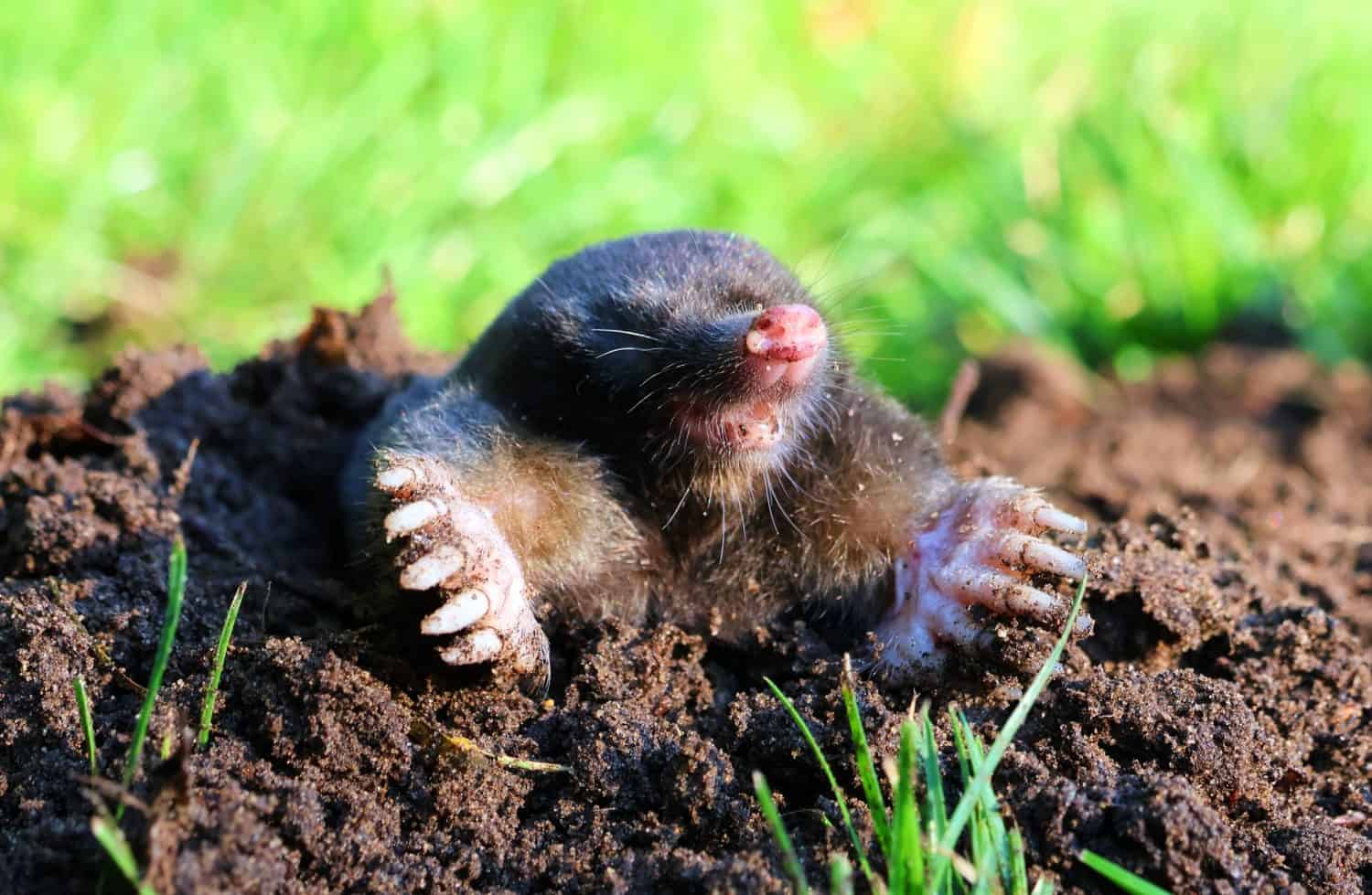
If you believe you’ve spotted a mole, consider its features. One of the easiest ways to identify a mole is by looking at its unusual front feet. Unlike most small mammals, moles have broad, powerful front paws that point outward and function almost like miniature shovels. Their bodies are cylindrical, their fur is short and velvety, and their eyes are extremely small. These adaptations help them move efficiently through tight underground spaces.
Despite what many homeowners believe, moles do not eat plant roots or garden vegetables. They are primarily insectivores that feed on earthworms, grubs, and other invertebrates. Unfortunately, their constant search for food can create problems aboveground. As moles push through shallow soil, they lift the grass and create volcano-shaped mounds or raised ridges that resemble narrow, winding trails.
Though their actions may cause some disruption, their digging also helps aerate the soil, and their appetite for insects contributes to the natural balance of underground ecosystems.
Voles: The Small Rodents That Eat Your Plants
Voles are herbivores that eat plant material, which makes them dangerous in gardens.
©Penny Hicks/Shutterstock.com
If you’ve ruled out the mole, you may think a vole caused the damage in your yard. Voles are small rodents closely related to lemmings and more distantly related to mice. They typically have stocky bodies, rounded noses, small ears, and relatively short tails.
Unlike moles, voles are herbivores. They eat grasses, seeds, bulbs, roots, and other plant material. This can make them much more destructive to gardens and landscaping. Voles can also damage flower bulbs, vegetable gardens, and ornamental plants by feeding on underground roots and other tender plant parts.
Voles create narrow runways through grass and dense vegetation. These paths often look like little trails where the grass has been flattened, clipped, or removed. Small openings that lead into shallow burrows may appear along these runways.
An interesting fact about voles is how quickly their populations can increase. Under favorable conditions, voles reproduce rapidly, and their populations can fluctuate dramatically from one year to the next. A yard with only a few voles one season might experience considerably more activity the following year. So, if you have an issue, it’s best to address it quickly.
Shrews: The Tiny Hunters That Rarely Damage Your Yard
You’d be forgiven for thinking a shrew may have caused the damage in your yard. They are the most misunderstood of the creatures in this group. Their small size and furry bodies cause many people to mistake them for mice, voles, or even baby moles. However, shrews are not rodents, and they have a completely different lifestyle.
Most shrews have tiny eyes, pointed snouts, small ears, and sharp teeth designed to catch and consume animal prey. Depending on the species, they may be only a few inches long. Like moles, shrews primarily feed on invertebrates, including insects, spiders, worms, and other small creatures. Unlike moles, most shrews aren’t powerful excavators. They typically travel through leaf litter, dense vegetation, or existing tunnels.
Because of this behavior, shrews rarely cause significant lawn or garden damage. They may occasionally use tunnels or pathways created by other animals, but they generally aren’t responsible for extensive raised ridges, damaged roots, or gnawed tree bark. In fact, shrews can be beneficial visitors because they consume insects and other invertebrates.
Eats invertebrates
Eats plants
Raised ridges or mounds
Surface runways
Moles
Eats invertebrates
Raised ridges or mounds
Voles
Eats plants
Surface runways
Shrews
Eats invertebrates
Marks show only what this article mentions for each animal.
Most Interesting Backyard Creatures?
Shrews are interesting for several reasons. For instance, shews have an extremely high metabolism. They burn energy quickly and must eat frequently to survive. Some species consume an amount of food equal to or greater than their own body weight each day.
Another wild fact is that some shrew species are venomous. The northern short-tailed shrew (Blarina brevicauda) produces toxic saliva that immobilizes prey. Although a bite may cause pain, swelling, or irritation in humans, the venom is not considered fatal to people.
Choosing The Right Solution is Key
It’s vital that you research before trying to remedy a situation in your yard because the solution depends heavily on the creature at fault.
©188515/Shutterstock.com
Often, once homeowners discover mysterious lawn damage, they may turn to commercial repellents, ultrasonic devices, or homemade solutions. But many popular approaches have little scientific evidence to support their effectiveness.
For example, ultrasonic stakes and vibrating devices are frequently advertised as ways to drive moles and voles away. However, experts say that electronic, magnetic, and vibration devices have not been proven effective at repelling moles. Frightening devices are also unreliable for reducing vole damage.
Another common incorrect recommendation is to eliminate lawn grubs. While moles do eat grubs, they also consume earthworms and other invertebrates. Killing grubs won’t necessarily remove their food supply, and unnecessary insecticide applications can harm beneficial soil organisms.
How to Protect Your Yard
There are plenty of ways to prevent damage in your yard, and the smart approach depends on the animal.
For moles, homeowners can begin by identifying active tunnels. One common method is to gently flatten a short section of a raised runway and check whether it has been repaired within about 24 hours. When mole damage becomes severe, properly placed traps in active tunnels are among the more reliable control options.
For voles, keeping grass trimmed, removing excessive vegetation, and reducing thick ground cover near vulnerable plants can make an area less attractive. Young trees can also be protected with appropriately sized hardware-cloth guards that extend below the soil surface and rise high enough aboveground to prevent access.
For shrews, intervention is generally unnecessary. Since they primarily consume insects and other small animals, they can contribute to a healthier garden ecosystem.
The Best Option May Be To Leave Them Alone
If you’re still unsure of what you’re dealing with, then the best next move may be to do nothing. After all, each of these species provide plenty of benefits. Moles help aerate soil and consume underground invertebrates, shrews feed on insects and other small creatures, and voles provide food for owls, hawks, snakes, and other predators.
Thank you for reading! Have some feedback for us?
Thank you for your feedback!
We appreciate your help in improving our content.
Our editorial team will review your suggestions and make any necessary updates.
There was an error submitting your feedback. Please try again.