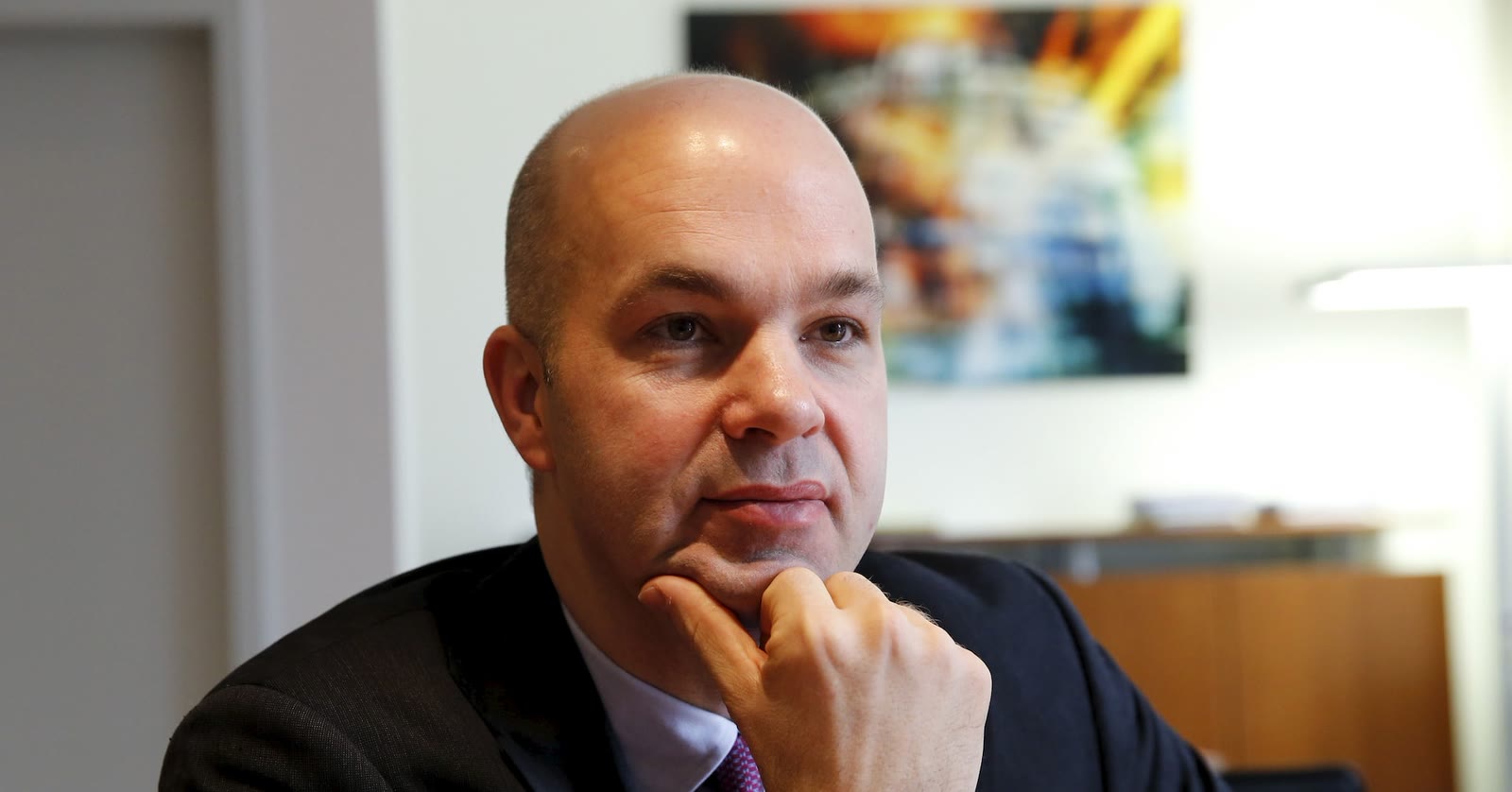
Marcel Fratzscher, chairman of the German Institute for Economic Research (DIW), speaks during an interview with Reuters in his office in Berlin, Germany, March 7, 2016. REUTERS/Fabrizio Bensch Purchase Licensing Rights, opens new tab
SummaryFratzscher cites wars, energy costs, bureaucracy and labour shortages as major risks in 2027Germany's growth will rely mainly on government spending, not businesses or householdsFratzscher says ECB must raise rates over next 12 months to protect credibility
BERLIN, Nov 26 (Reuters) - Germany has to prepare for two more very difficult years with President Donald Trump in the White House, DIW president Marcel Fratzscher told Reuters on Thursday, a day after Trump unveiled new tariffs.
"New tariffs create uncertainty and weigh on the German economy, and for that reason 2027 could also turn out weaker than we currently still hope," Fratzscher said, forecasting growth of more than 1.0% for next year.
The Misinformation Monitor newsletter rounds up international misinformation narratives, with a "Real or Fake?" quiz in every edition. Sign up here.
Report Ad
DIW is one of Germany's leading economic research institutes and advises the federal government.
Germany assumes that the Turnberry Agreement - which sets a ceiling of 15% on US tariffs - will be honoured.
"I would never rely on Donald Trump keeping his promises," Fratzscher said when asked about the agreement. "Throughout his entire presidency we have to prepare for him escalating again and again."
ENORMOUS RISKS FOR 2027
Fratzscher said he expected the German economy to keep recovering but he cautioned that the risks were "enormous", citing a possible escalation of the wars in the Middle East or Ukraine, higher energy costs, domestic political conflict and a trade dispute involving China and the US.
"Uncertainty is poison for companies," he said.
Finance Minister Lars Klingbeil has said 2027 must be the year of private investment, but Fratzscher said he would not pin high hopes on it. Companies were investing little in Germany because of uncertainty and difficult conditions, from taxes and regulation to bureaucracy and skilled labour shortages, he said.
"It will still be government consumption" that drives growth, he said, rather than private consumption or investment.
CONTINUITY EXPECTED AT THE ECB
Fratzscher said the European Central Bank must raise rates over the next 12 months to protect its credibility and guard against a wage-price spiral, though it cannot influence energy prices driven by the wars in Ukraine and the Middle East.
If Pablo Hernández de Cos is confirmed as next ECB president, Fratzscher said he expected two or possibly three rate moves next year. He described De Cos as "a very astute man with a great deal of experience in this position, who is highly competent as an economist."
Reporting by Christian Kraemer, Maria Martinez, Klaus Lauer and Reinhard Becker; Editing by Toby Chopra
Our Standards: The Thomson Reuters Trust Principles., opens new tab