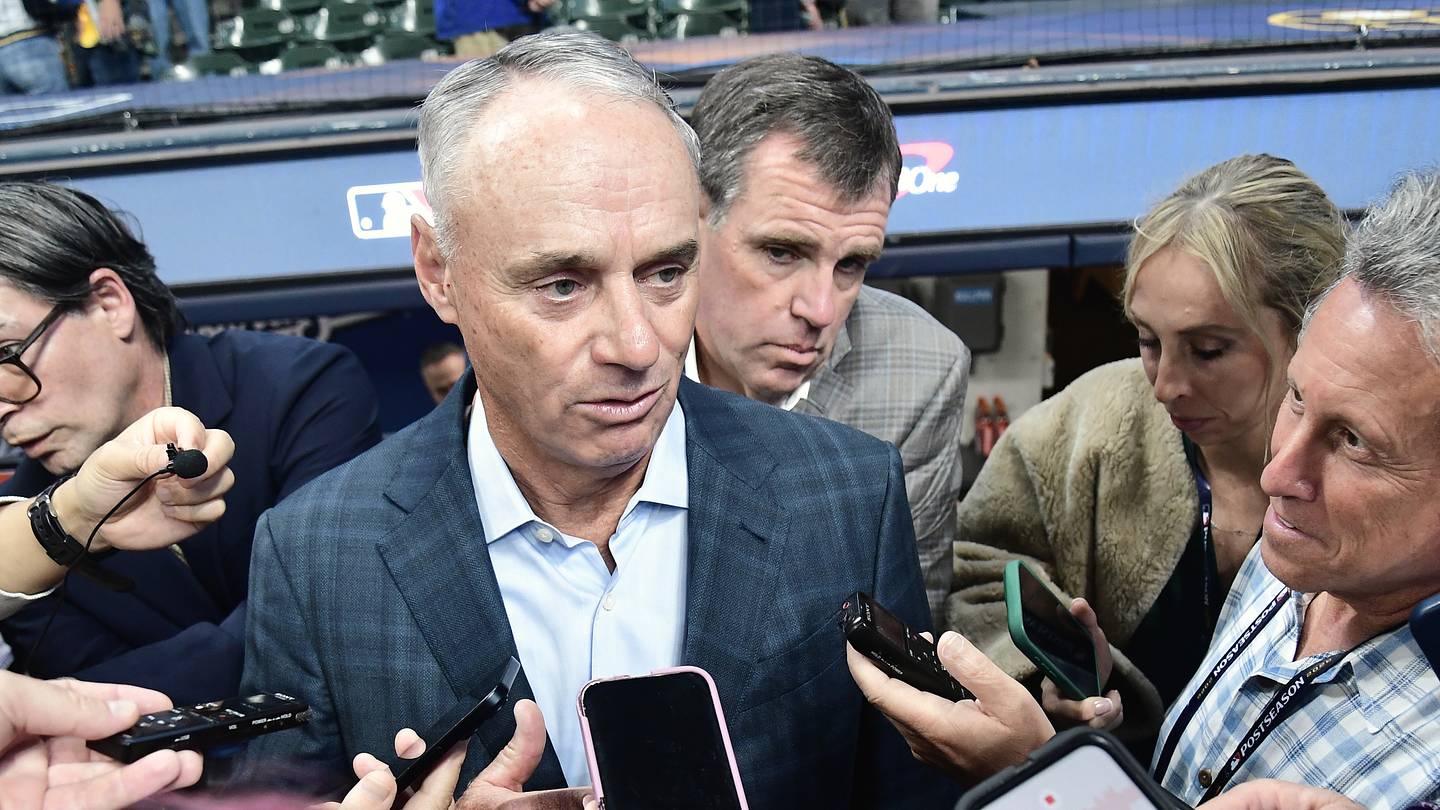
Major League Baseball’s owners sued the league’s players on Wednesday in a preemptive strike to limit the MLB Players Association’s leverage in negotiations.
In a lawsuit filed in the Southern District of New York, MLB asked a judge to declare that the league’s impending lockout is legal under antitrust law. The class-action suit is an attempt to neutralize the threat of the MLBPA disclaiming its status as the players’ bargaining representative. Doing so would allow the players to argue the lockout is an illegal labor boycott, which could open the door for them to sue MLB on antitrust grounds. A successful antitrust suit could leave MLB liable for three times the financial damages suffered by the players.
MLBPA interim director Bruce Meyer and outside counsel Jeffrey Kessler have experience with the tactic. Both the NFL and NBA labor disputes in 2011 involved their respective players’ unions relinquishing their status as bargaining representatives, after which players filed antitrust suits. Meyer and Kessler represented NFL players in their lawsuit against the league.
MLB spokesman Glen Caplin said the league’s goal is to have a judge “proactively disarm the union’s nuclear option of disclaiming.”
The lawsuit states, “MLB has a reasonable and imminent fear that the Union will attempt to use the threat of antitrust liability to derail the collective bargaining process altogether in favor of antitrust litigation."
MLB says it is filing the action to keep the dispute at the bargaining table.
The Players Association ripped MLB in response to the lawsuit:
The lawsuit filed today by MLB is completely frivolous. We will respond appropriately, but MLB’s decision to run to court in the middle of negotiations rather than bargain in good faith is incredibly disappointing.
Notably, the lawsuit lists all 30 teams as plaintiffs, while naming the union and eight members of its executive subcommittee as defendants. The listed players are free agent pitcher Chris Bassitt, Padres infielder Jake Cronenworth, free agent pitcher Pete Fairbanks, free agent outfielder Cedric Mullins, Mets infielder Marcus Semien, Pirates pitcher Paul Skenes, Mets pitcher Tarik Skubal and Yankees pitcher Brent Suter.
As The Athletic’s Evan Drellich noted, this has created an incredible scenario in which the New York Mets agreed to give Skubal a $450 million contract four days before targeting him with a lawsuit.
Tarik Skubal is being sued by the Mets—and MLB’s 29 other teams–three days after signing a $450 million contract with the franchise. | IMAGN IMAGES via Reuters Connect
MLB’s move on Wednesday is a clear indication that it expects a long, contentious labor battle. The owners are trying to shield themselves against a costly antitrust suit before the lockout even begins. And they’re willing to absorb the PR hit of suing their own players to do so.
The league is set to lock out the players on Dec. 1 and the two sides remain far apart on the fundamental economic issues. The owners are standing firm in their demand for a salary cap and floor, while the players have repeatedly said they will never accept a cap.
MLB has proposed a $258.2 million salary cap paired with a $180.2 million floor, while the union has countered with a system retaining the current competitive balance tax and raising its threshold to $300 million.
The last time MLB and the union went toe-to-toe over a salary cap was during the 1994–95 strike, which lasted 232 days and resulted in the cancellation of the 1994 World Series.
A salary cap isn’t the only issue that must be sorted out for baseball to be played in 2027. There are major disagreements on the distribution of media rights revenue, minimum salaries, salary arbitration, service-time rules, the international signing system and more.
There is considerable irony in MLB’s claim that it wants to keep the dispute at the bargaining table, considering it has already involved the courts before the current collective bargaining agreement has even expired.
Given the number of contentious issues that must be resolved before a new deal is reached, it’s not hyperbole to say Opening Day is already in jeopardy.
Add us as a preferred source on Google
Follow