The Treasury has raised concerns about the level of spending on support proposed in Alan Milburn’s review into youth unemployment, amid pressure for the welfare bill to start reducing more quickly.
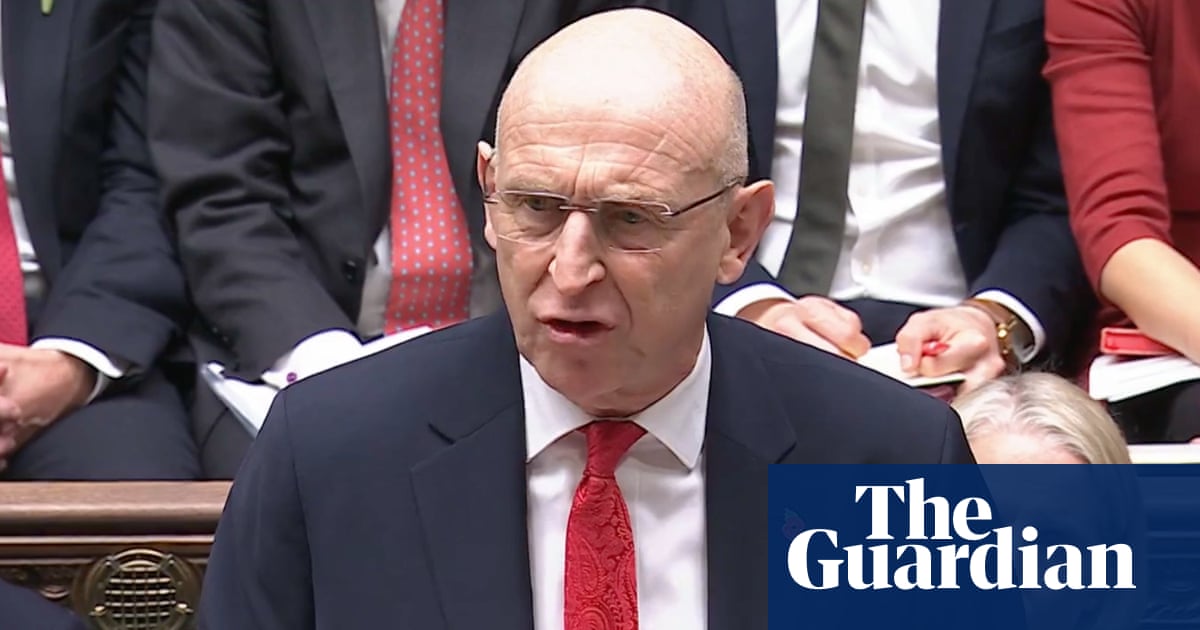
Whitehall sources have told the Guardian that the chancellor, John Healey, is not happy with the level of spending required under the proposals and wants the system to break even at an earlier date.
The government has promised to back the report’s overall vision to create an entirely new welfare system for young people under 25, including spending cuts next year to help pay for his proposals for additional help and support for those out of work to get them into education or employment.
But ministers have privately admitted that the multibillion-pound costs of Milburn’s support package may be unaffordable, given that they must be met from existing budgets. “Obviously there is trepidation about the upfront costs,” one said.
A second minister said it was clearly Healey’s intention to find ways to reduce the costs of delivering the support package, citing the political necessity of seeing the overall welfare bill begin to come down faster.
At least two options are under cross-government consideration – one of which is initially less generous upfront support than suggested by Milburn’s report.
A second option is to use the planned changes for over-25s to cut disability payments for a wide group of people, with as many as one in six at risk of losing them altogether. The over-25s are also likely to be given a less generous offer of support and training than younger people.
Milburn’s plan would see the government spend £5.8bn a year by the end of the decade on getting young people into work.
Nearly £2bn of that would provide advice to get into training, education or work, while another £2bn would be spent on creating more vocational training courses and apprenticeships, and a further £1bn would go to companies to incentivise them to hire young workers.
That spending would be increased over time, starting with £500m next year, which Milburn has promised will be found from existing budgets. The Department for Work and Pensions, Department of Health and Social Care and Department for Education are now looking for ways to deliver those.
The longer-term spending, however, is not guaranteed, and will be decided for certain in next year’s spending review.
skip past newsletter promotion
after newsletter promotion
Officials are also drawing up plans to redesign the personal independence payment (Pip) system for older adults in England and Wales after the work and pensions minister, Stephen Timms, deemed it “no longer fit for purpose”.
While ministers are keen to extend the Milburn principle that disability benefits should be focused on getting people into work, they are understood to have accepted the central proposal in the Timms report not to scrap Pip altogether.
Instead they are designing a new assessment system for 90% of claimants over 25, which will involve some people receiving more, some receiving less and many losing their benefits altogether.
Timms recommended that no one who is deemed not to incur extra costs as a result of their disability should receive Pip – a number that the Resolution Foundation calculated could be as high as one in six claimants, or more than 600,000 over-25s.
Officials are now working on the details not only of how the new assessments should work, but also whether they should be applied to existing claimants. They are also drawing up transitional arrangements that would apply to people coming off Pip after they are 25 and any existing claimant who is affected by the changes.
The relatively non-specific nature of Timms’s recommendations mean there is scope to design systems that save very different amounts of money, government sources say. Downing Street officials say Andy Burnham is keen to start cutting the welfare bill as soon as possible.
The prime minister faces pressure from the Conservatives to reduce the overall cost of working-age benefits. He has said this is his plan, but he has pushed back against the idea of what he called “crude cuts”, saying these often just created costs elsewhere.