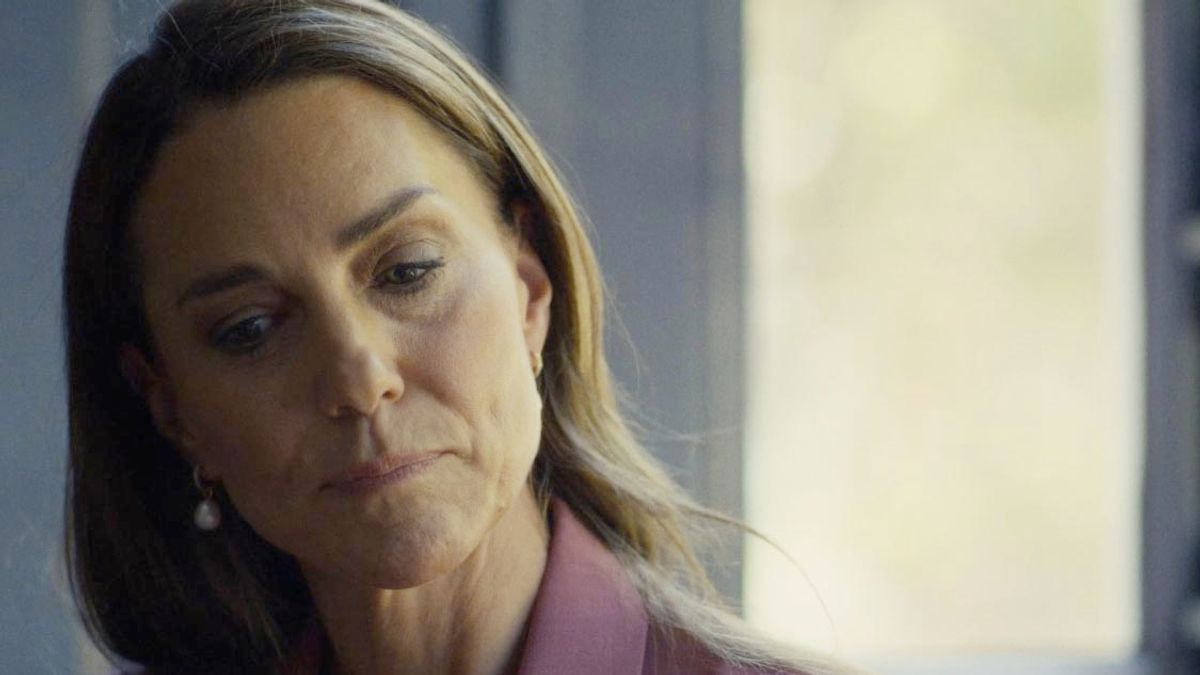
OPINION: In his weekly column, the Mirror's royal editor Russell Myers analyses how the Princess of Wales' landmark documentary Heal is changing the way the royal family communicates...
When the Princess of Wales first told the nation she had cancer in March 2024, she did it alone on a garden bench. The short video stunned the world after it had rocked the royal family to its core. More than two and a half years on, Catherine returns to our screens on Sunday, with a new documentary delivering a reflective and searingly honest portrayal of her experience from diagnosis, treatment and recovery.
Heal, a 30-minute documentary airing on BBC One, follows the princess as she takes on the National Three Peaks Challenge in June, climbing Ben Nevis, Scafell Pike and Yr Wyddfa / Snowdon within 24 hours to raise money for the Royal Marsden, the hospital where she was treated. Along the way she meets others living with cancer, the medical staff who care for them and, at the finish line, William and their three children, who greet her in scenes that will cut through the most hardened of hearts.
I was invited to a special screening this week, and contrary to what you might expect, I do not spend my life watching documentaries of the royal family. But this is different. Not only is it incredibly moving, I believe it will be the most intimate insight we have ever seen of a member of the royal family on film.
By the very nature of the institution, they don't normally expose themselves like this, by choice anyway. Catherine's decision to take part in such a project reveals a true vulnerability of what makes us not only human, but equal. It is what the princess says that will stay with viewers, speaking with remarkable honesty about what cancer has done to her, how it changes your body and your mind, as you are faced with uncertainty around diagnosis, treatment and recovery.
She has spoken of this before of course, through a social media series on nature and in conversation with fellow sufferers across hospitals in the UK. But this time, there is something deeper. Facing your own mortality, she explains, means accepting that life is not infinite, and once you have lived through that it is very hard to go back to the person you were before. It softens your heart, she says.
This is a princess laying bare her vulnerabilities in a way no one would expect. I have written previously how we should celebrate Catherine being back in business, a great and much needed addition to the royal squad, and in many ways she is. She has just returned from a successful visit to India, supporting Prince William, on their first joint international tour for four years, and her diary is fuller than at any time since her diagnosis. But Heal makes clear she has not simply picked up where she left off. The experience has reshaped her, and she wants to use it. Kensington Palace says she hopes the film will help others navigate diagnosis, recovery and life beyond cancer, and transform access to holistic care that treats the whole person, not just the disease.
It also marks a profound shift in how the Waleses speak to the public. Her Mother Nature films, her conversation with Robert Macfarlane in Country Life and now Heal all show a princess telling her own story, in her own words, on her own terms. We’ve witnessed a Princess of Wales open herself up in the past, in her own words, with consequences that nearly brought down the institution. Catherine's contribution will only embolden it. This new direction is more than a turning point, it's an intentional message of hope and how Catherine, as a future Queen, intends to deliver a more human side to the royal family.
It's clear both the Princess and her husband are in sync with such matters. William is embarking on a vision with the Duchy of Cornwall to tackle homelessness, taken Earthshot to Mumbai and streamed it to millions around the world and pitched up on Graham Norton's sofa chatting about Aston Villa and The Traitors. Both of them understand that a modern monarchy is judged on whether people feel it is on their side.
In a fractured world, of which arguably the royal family, with the wealth and privilege they exude, this can be tricky. Yet, I would argue, William and Catherine are building a monarchy that is relatable and justifiable in the modern age. As she says in the film, we are not meant to carry life's challenges alone. A message of hope from despair is sometimes all we need.
Royal security in the spotlight....again
A reported break-in at Anmer Hall should send a chill through every corridor of Whitehall. This is the Norfolk home where the Princess of Wales recovered from cancer, sitting on the King's own Sandringham estate.
The family were at Forest Lodge in Windsor. But this incident follows a previous catalogue.
On Christmas Day 2021, Jaswant Singh Chail scaled the walls of Windsor Castle with a loaded crossbow, intent on killing the Queen. In October 2024, masked thieves rammed a security gate on the Windsor estate and stole vehicles from Shaw Farm while the Waleses slept nearby. In May, Andrew Mountbatten-Windsor was allegedly confronted by a man in a balaclava near his Sandringham home. A man denies the charges.
So are we doing enough to protect our future King and Queen?
Hard questions must also be asked of successive governments whose relentless squeeze on police budgets has left forces stretched to breaking point. Royalty protection does not exist in a bubble. When officers are spread thin, gaps appear. Do check out this week’s episode of Pod Save the King, now available on Youtube, where Mirror Crime Editor Tom Pettifor will discuss this in detail. In a month the entire senior royal family will gather at Sandringham for Christmas, on dates everyone knows, and walk to church past crowds who have queued since dawn. This is part of royal tradition and no one wants to lose it.
For six years Prince Harry has been mocked for insisting that being born royal makes you a target for life. It is getting harder to argue he is wrong.
Are Harry and Meghan invading their own privacy with cosy photographer deals?
For a couple who have fought so fiercely to keep their children out of the public eye, Harry and Meghan chose a curious place for Archie and Lilibet's first outing since moving back to Britain. The family were given VIP access to a packed preview night at Hyde Park's Winter Wonderland, knowing photographers were there, and agreed the children could be pictured as long as their faces were blurred. When Catherine took a toddler George in 2014, she insisted there were no photographers at all. For the Sussexes, privacy seems to be something to demand when it suits them. Is this the latest case of double standards?
A true friendship based on Trust
Few friendships in royal life are as genuine as the one between the King and Sir Idris Elba. As a teenager from east London, Idris was handed a small grant by the Prince's Trust to help him chase his acting dream. He went on to become a global star and, last year, a knight of the realm. Now the pair have teamed up for The Trust, a Netflix documentary marking 50 years of the charity, in which Idris even introduces Charles to his mum. "I'm very proud of you anyway, you know that," the King tells him. "It's what it's all about." Few could embody the Trust's life-changing work better. Idris is living proof that a little belief goes a long way.