It is, unfortunately, a familiar scene. At the dinner table, a woman berates her granddaughter with invasive, personal questions – why are you still single? When are you going to have kids? – punctuated by unnerving thrusts of her steak knife. The granddaughter is clearly uncomfortable, but her grandmother pays no attention.
Anyone who has been in this situation likely knows what comes next. The granddaughter may try to deflect, only to invite further questioning, or call out her grandmother’s rudeness, which risks escalation.
But last month, in a popular video, the cycle was interrupted. “Stop! What’s wrong with this picture?” asks another woman, seemingly descended from heaven.
She admonishes Grandma: being close to someone does not mean you can demand such personal information from them! The grandmother apologizes, saying her granddaughter doesn’t have to answer any of those questions.
Oh, to live inside an episode of Life100, a web series in which emotional life lessons are served warmly but with a hint of irreverent humor, like Sesame Street for people who have to pay rent.
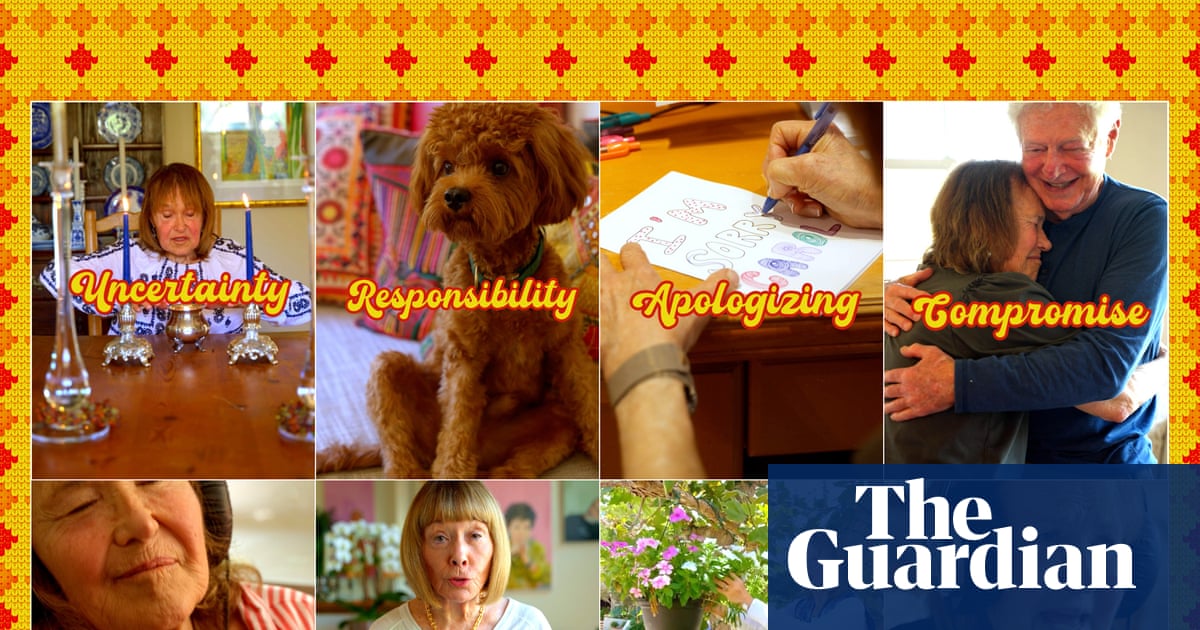
Since its launch in May, Life100 has racked up hundreds of thousands of followers and millions of views. Its two protagonists, Susan and Sondra, archly explore the frustrations of adulthood, and how to navigate it without being an asshole. Lessons include what to do if you’re catastrophizing, the importance of collaboration and how to ask for help.
In our age of isolation and weaponized therapy-speak, a careful, gentle and funny look at human relationships from two women in their 80s is exactly what we need.
The stars of Life100 are Susan Thau and Sondra Goldstein, both PhDs and licensed clinical psychologists in Los Angeles. Both in their 80s, Thau and Goldstein met more than 20 years ago, working at healthcare consortium Kaiser Permanente. Both specialized in attachment theory, which focuses on how humans connect with each other and the barriers to that connection. They have written a book, The Roller Coaster of Emotion in Couples Therapy, and created a film, Living Love at Last.
But though they were no strangers to presenting their ideas in public, they had mostly spent their careers speaking to other professionals.
“We began to feel that we were missing something because we were not part of the internet,” says Goldstein. They tried starting their own Instagram page, but it didn’t take off. For once, they didn’t know how to connect.
Conversely, Thau’s grandson, Weston Goodman, knows just what to do online. “Every one of my friends is on social media – it’s their primary form of media consumption. And yet there’s a shame around it, like it’s a waste of time or a distraction,” he says.
Susan Thau and Sondra Goldstein. Photograph: Weston Goodman/B6 Studios
Goodman and his friend Mason Collins founded B6 Studios to work with the internet-based creators they found exciting. To them, social media was a new broadcast medium and they wanted to “create television shows for the feed”, says Goodman. They started with a surreal comedy fiction series called Forever Zone, created by Gaspar Cello.
At the same time, Goodman was trying to help Thau and Goldstein with their social media presence. (Conveniently, Goodman lives with Thau.) “Susan and Sondra come to relationships with a very different framework than my generation does. They’re very connected to their community and their friends, and I think they know what it is to have lifelong relationships, and the skills that it takes to maintain those,” he says.
Goodman conceptualized Life100 as a kind of internet home economics for a generation whose schools defunded the program, and thus never learned some key life and relationship skills. Goodman writes and edits the episodes based on topics Thau and Goldstein want to cover. Ariadna Thau, Goodman’s cousin, produces the series and sometimes shows up on-screen (she plays the granddaughter being interrogated at the dinner table).
Originally, the first few episodes didn’t get more than a few thousand views, but then came Empathy. In it, Susan’s friend, Carol, has just canceled on dinner plans, saying she’s overwhelmed. Susan is furious – she’s spent all day cooking a beef stew. She’s offended – her time and effort haven’t been respected!
Allow Instagram content?
This article includes content provided by Instagram. We ask for your permission before anything is loaded, as they may be using cookies and other technologies. To view this content, click 'Allow and continue'.
“It’s a pretty universal situation,” says Goodman, but also one that’s easy to argue about.
skip past newsletter promotion
after newsletter promotion
Some viewers saw themselves in Carol, overcommitted and needing some me time. But others knew the pain of being flaked on, and began debating the limits of empathy for someone who never shows up. People began to comment and share the post. “Carol is dead to me,” wrote one, while others mused whether or not Susan should freeze the stew for the next time Carol came over. The video, per Goodman, got about 3m views.
There’s been a growing awareness of mental health as an issue worthy of attention. But as ever in the US, access to even basic mental healthcare (or physical, for that matter) remains tied to employment or out of reach. So it’s no surprise that, according to the Pew Research Center, half of US adults under the age of 50 say they get health and wellness information from social media and podcasts. However, about 38% of those health and wellness influencers are selling some product or subscription. And even if they’re not, many content creators scaremonger and employ therapy-speak to amp up engagement and followers.
Life100 is searching for engagement, but not for engagement’s sake, the team say. “We want to help build community, help people connect and confront the uncomfortable so they can become better humans, friends, children, parents and partners,” says Ariadna Thau.
And just a few months after launch, the community is there. Both Thau and Goldstein have been stopped in public and recognized for their work. Fans have parroted Goldstein’s catchphrase – “Stop! What’s wrong with this picture?” – to her. “It’s beyond my life experience to have somebody know me from something that’s not my personal life,” she says.
Life100 has covered what it feels like to not be listened to and why you should apologize to your friends. Though some of the videos deal with intergenerational communication, they never come off as scolding younger generations. Mostly, it sounds like advice to fellow older adults, reminding them it’s not just the kids who need to mind their manners.
In a recent video, Susan says she’s going to learn how to kickflip, then admits to that she doesn’t know how to skateboard. “Aren’t goals supposed to be ambitious?” she asks. Sondra explains that there’s a difference between a challenging goal and one that skips all the steps where you’re actually learning.
I thought of all my failed attempts to start a new hobby, where I figuratively and perhaps literally jumped into the deep end of a professional project, or tried a DIY project at home, only to wind up mad at myself when I couldn’t do it. It was so obvious that an octogenarian newbie should not try an advanced skateboarding maneuver at the top of the stairs. And, if I was being honest with myself, there were times when I also had gone too far, too fast.
The language of therapy has become second nature for the terminally online. We are constantly hearing about holding space, trauma dumping, toxic asks and being triggered. Sometimes this language is misused to excuse poor behavior or accuse someone.
“Humor makes all of this digestible. People would not take this in if it were serious,” says Thau. It’s also probably why the message is resonating. The lessons in Life100 are not new to many people; most of us can probably guess at the value of knowing, say, how to compromise. But watching Susan crash out over a jigsaw puzzle resonates because you too have probably totally lost it over something completely innocuous. And even if the emotions are real, you can see it’s also a bit silly to be mad that your friend has achieved more than you have.
“When you add humor, when you add action to it … that’s what stays in people’s minds,” says Goldstein. Your guard is lowered, which lets the message in. That connection is really what Thau and Goldstein have been looking to create in their entire careers. They were just waiting for the internet to catch up to them.