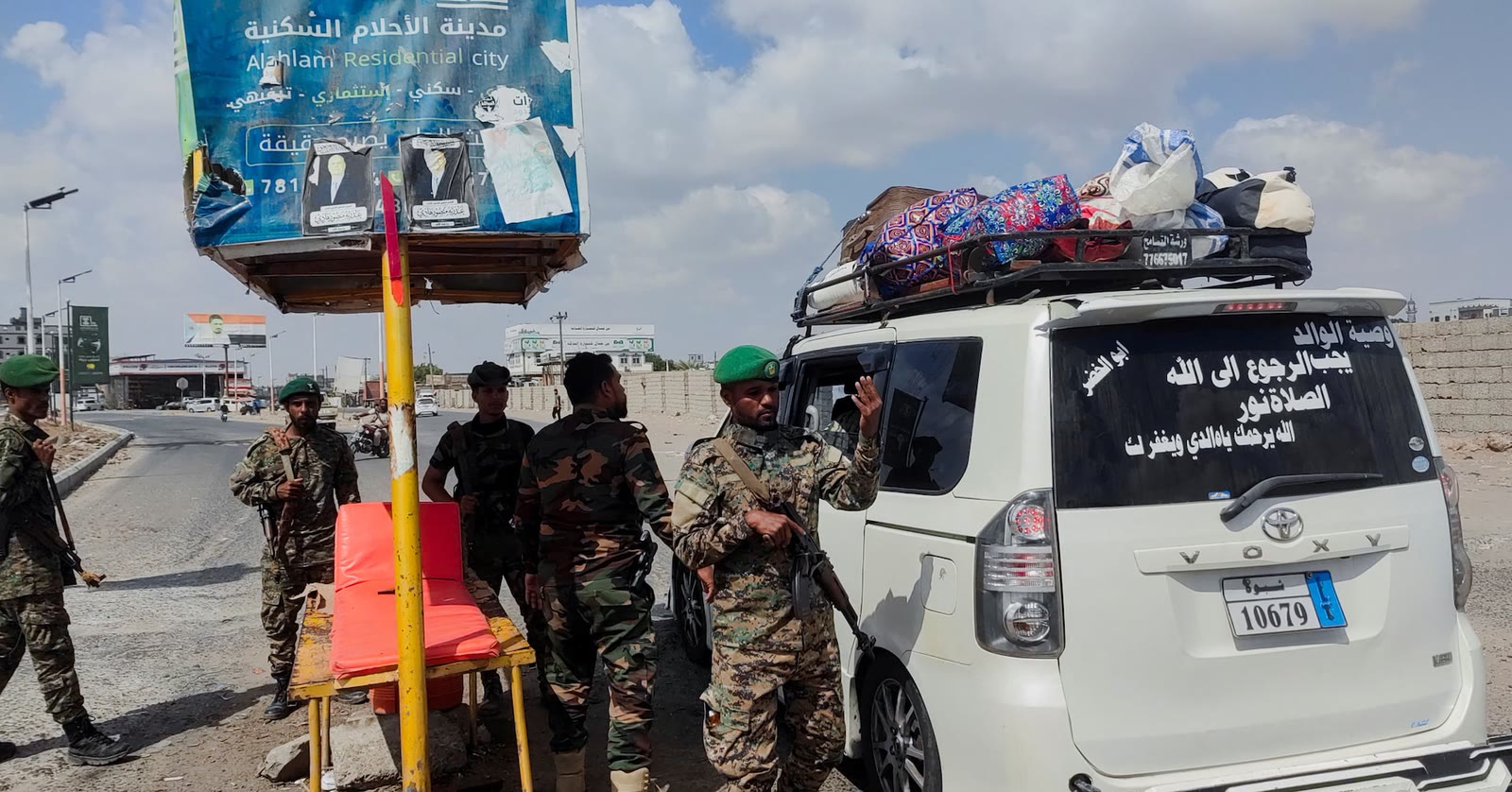
Item 1 of 3 Members of the National Security Forces man a checkpoint as security is tightened amid concerns of Houthi forces drawing closer in Aden, Yemen November 19, 2026. REUTERS/Stringer
[1/3]Members of the National Security Forces man a checkpoint as security is tightened amid concerns of Houthi forces drawing closer in Aden, Yemen November 19, 2026. REUTERS/Stringer Purchase Licensing Rights, opens new tab
SummaryHouthis advance to about 60 km from Aden, military spokesperson saysGovernment says forces redeployed on November 15 to protect AdenSpokesperson says Houthis may open new fronts toward Marib or Shabwah
WASHINGTON/RIYADH, Nov 24 (Reuters) - Yemen's Iran-aligned Houthis have pushed as close as 60 km (37 miles) to Aden, the temporary capital of the country's internationally recognised government, but they will not capture the city, Yemen's military said on Tuesday.
"I'll speak to you frankly. The situation is not where we want it to be. But it's not as dire as reported," Colonel Majed Abdullah Al-Nuzaily, spokesperson for Yemen's armed forces, told a group of reporters via video link.
The Reuters Iran Briefing newsletter keeps you informed with the latest developments and analysis of the Iran war. Sign up here.
Since fighting resumed in Yemen in July in parallel with the wider Iran war, the Houthis have rapidly advanced in Yemen, seizing territory from the internationally recognised government and its allies, who are backed by Saudi Arabia.
The Saudis have carried out airstrikes on Yemen in support of their allies on the ground, while the Houthis have struck Saudi oil targets, airports and office towers.
Aden, now the target of Houthi missile and drone strikes, had previously not seen major hostilities since street battles in 2015, soon after the internationally recognised government fled Houthi-run Sanaa and made the port city its base.
Government forces inside the city, perched around an extinct volcano jutting into the Indian Ocean, have set up checkpoints, pulled in reinforcements, dug trenches and set up earth barricades on roads to the front line, residents and military officials say.
SPOKESPERSON ACKNOWLEDGES SETBACKS, BLAMES IRAN
Al-Nuzaily defended the November 15 redeployment of forces to protect Aden, saying they would return later to reclaim positions along the vital Bab el-Mandeb Strait.
"Yes, Houthi forces are about 60 kilometers from the city. We take that seriously, and we are ready for it," Al-Nuzaily said, adding that Yemen's internationally recognised government remained in Aden "and it will stay in Aden".
While he cited military accomplishments, including in Marib, where he said Yemeni troops had broken through defensive lines that the Houthis had spent 12 years building, Al-Nuzaily also acknowledged major setbacks and operational shortcomings.
In a statement accompanying the call, he said there were "indications that our communications were penetrated".
He acknowledged the Houthis had reinforced along the coast, adding: "There are signs they may open new fronts."
"Whether toward Aden or to the east, toward Marib and Shabwah, their aim is simple: they want Yemen's oil and gas," Al-Nuzaily said in the call.
The fighting has displaced hundreds of thousands of people since Yemen's civil war reignited, with many now surviving on meagre aid handouts in small tarpaulin camps in the hills around Taiz, Yemen's third-largest city, now besieged by the Houthis.
Al-Nuzaily said the objectives of Yemeni government forces had not changed and that they intended to reclaim Sanaa from the Houthis and drive the group from around Taiz in the process.
"So the capabilities that we have, the forces that we have, are enough to liberate the whole of Yemen," he said.
Reporting by Phil Stewart and Timour Azhari
Editing by Gareth Jones
Our Standards: The Thomson Reuters Trust Principles., opens new tab
Phil Stewart has reported from more than 60 countries, including Afghanistan, Ukraine, Syria, Iraq, Pakistan, Russia, Saudi Arabia, China and South Sudan. An award-winning Washington-based national security reporter, Phil has appeared on NPR, PBS NewsHour, Fox News and other programs and moderated national security events, including at the Reagan National Defense Forum and the German Marshall Fund. He is a recipient of the Edwin M. Hood Award for Diplomatic Correspondence and the Joe Galloway Award.