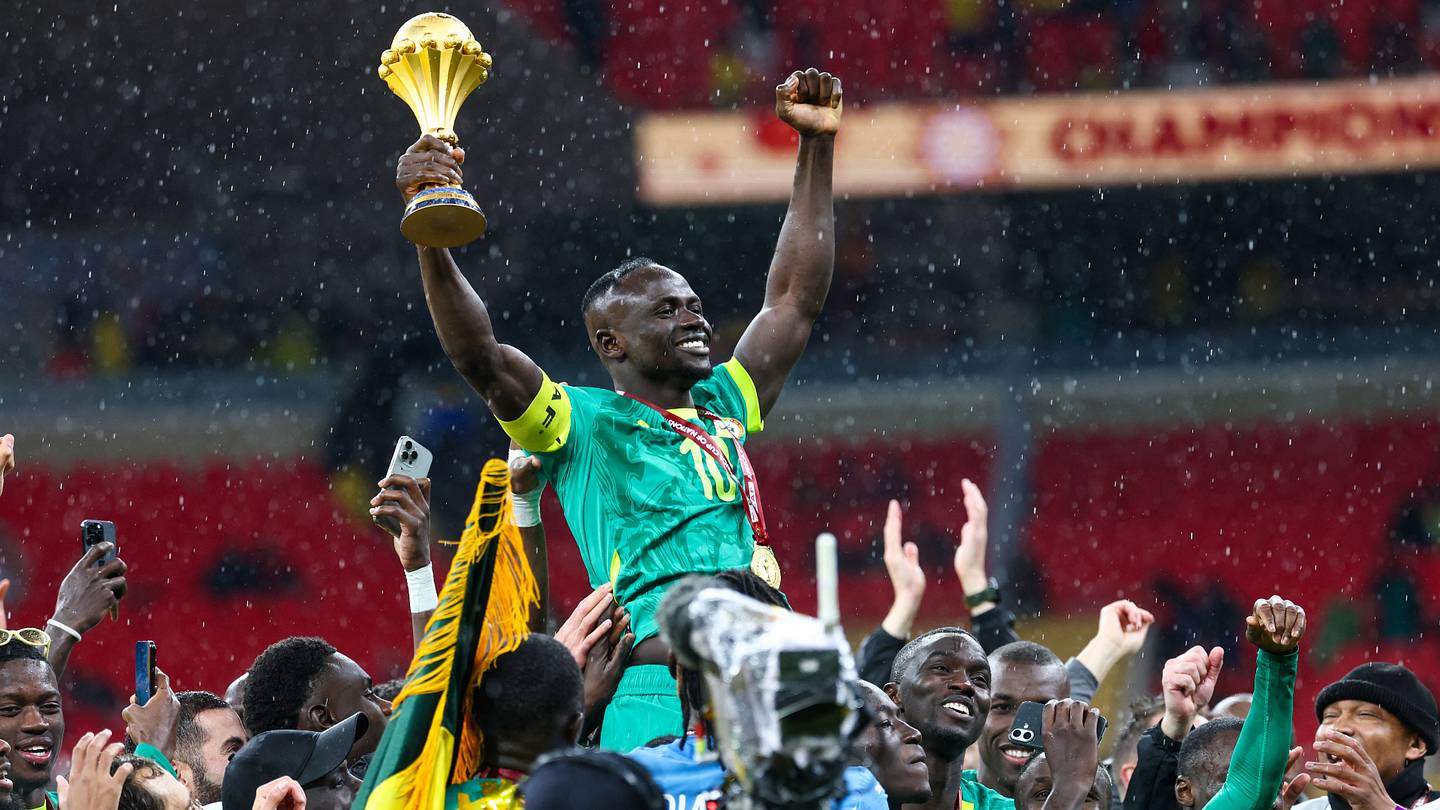
Senegal was hailed as the 2025 Africa Cup of Nations (AFCON) champion on the pitch in January, despite briefly storming off in the final. Morocco won the title after an appeal 57 days later, only to have the trophy snatched from its grasp in the courts eight months on. But the real winner, for once, was the referee.
The court of arbitration for sport (CAS) ruled in favor of official Jean-Jacques Ndala, finding that “the referee did not err in law” by allowing the contentious final in Morocco to resume once Senegal’s players returned to the field after initially protesting his award of a penalty by heading to the locker room.
On Tuesday, Nov. 24—310 days after Senegal beat Morocco in the final with a single goal in extra time—the independent judiciary body upheld the protest and stuck with the result on the pitch to see the Lions of Teranga belatedly crowned as 2025 AFCON champions once and for all.
Morocco’s manager at the time, Walid Regragui, likened the final to something out of “a Hitchcock script.” The chaos which has unfolded over the best part of a year is certainly worthy of a cinematic release.
What Happened in 2025 AFCON Final?
Senegal’s players were furious with the officiating. | Ulrik Pedersen/NurPhoto/Getty Images
The seeds of discontent which sprouted in Rabat on Jan. 18 were sown over the preceding weeks, if not months. There had been unhelpful—and largely unfounded—talk of Morocco receiving favorable refereeing and scheduling throughout its home tournament. The well-funded national team was at its sporting zenith and had a first AFCON title in 50 years very much in its sights.
This atmosphere of conspiracy was only heightened during a horribly tetchy final. After a goalless 92 minutes, Senegal thought it had taken the lead in stoppage time through Ismaïla Sarr. However, referee Ndala judged that Abdoulaye Seck’s shove on Achraf Hakimi in the buildup amounted to a foul, blowing his whistle before Sarr’s effort had hit the back of the net. Given that hasty intervention, VAR could not get involved even if it had felt the decision was incorrect.
Morocco’s Real Madrid talisman Brahim Díaz tumbled under little more contact from El Hadji Malick Diouf at a subsequent corner. Play had been initially waved on before Ndala was directed to his pitchside monitor by VAR, wading through a thicket of angry green shirts to eventually award a penalty. At that point, Senegal manager Pape Thiaw ushered a mass walk-off from his team.
Captain Sadio Mané was the only Senegalese player to remain on the pitch, assessing the wreckage in front of him before heading into the locker room to convince his compatriots to return to the field. Upon resumption of the contest, more than 15 minutes after the decision was first awarded, Díaz saw his timid penalty saved.
Pape Gueye’s thunderous effort in extra time was all Senegal needed to win a game that had long since escaped Morocco’s mental grasp, and the West African giants celebrated the nation’s second title in three additions.
Crazy Conclusion90+2: Senegal has goal disallowed90+8: Penalty awarded to Morocco90+12: Thiaw leads Senegal players off the pitch90+18: Mané ushers his teammates back onto the pitch90+24: Mendy saves Díaz’s penaltyWhy Was Morocco Ever Given the Title?
Achraf Hakimi was briefly a continental champion at international level. | Torbjorn Tande/DeFodi Images/Getty Images
Morocco’s first contest of the result was initially waved away in disdain by the Confederation of African Football (CAF) disciplinary committee. However, the influential upcoming World Cup co-host took the matter to CAF’s appeal board and successfully argued in March that Senegal should be stripped of its title.
The case centered on Articles 82 and 84 of the confederation’s handbook.
Article 82 of CAF’s regulations states:
“If, for any reason whatsoever, a team ... leaves the ground before the regular end of the match without the authorization of the referee, it shall be considered loser and shall be eliminated for good from the current competition.”
Article 84 simply decrees that any team which contravenes Article 82 “shall be eliminated for good from the competition” and awarded a 3–0 defeat.
Timeline of DecisionJan. 18: Morocco 0–1 (AET) SenegalJan. 28: CAF disciplinary committee rejects Morocco’s appeal to have the result overturnedJan. 28: CAF fines both federations for their conduct and suspends Senegal manager Pape Thiaw for five gamesMarch 17: Morocco is retroactively crowned 2025 AFCON champion by the CAF appeals boardMarch 25: Senegal appeals to CASOct. 8: CAS hold an in-person hearing behind closed doors at the body’s Swiss headquartersNov. 24: Senegal is crowned AFCON champion (again)CAS’s Reasoning for Senegal Decision
The court of arbitration for sport is a shadowy body. | FABRICE COFFRINI/AFP/Getty Images
Put simply, Morocco argued that the game should have been forcibly concluded in its favor at the point at which Senegal’s players left the field in protest. CAS, however, judged that the referee was within his rights to restart the match, something that both sides crucially agreed to during the final.
“The arbitral panel considered that the referee’s decision to resume the match or to stop it fell definitively within his sole authority,” a press release from CAS explained.
“By blowing his whistle to restart play, the referee considered that the conditions for resuming the match had been met—both teams were on the pitch again, and both expressed their willingness to resume.”
“Since Articles 82 and 84 of the AFCON regulations are intended solely to determine the outcome of a match when a team’s conduct leads the referee to call off the game permanently, they are therefore not applicable in this case,” CAS added. “In conclusion, the panel considers that in resuming the match, the referee did not err in law.”
Add us as a preferred source on Google
Follow