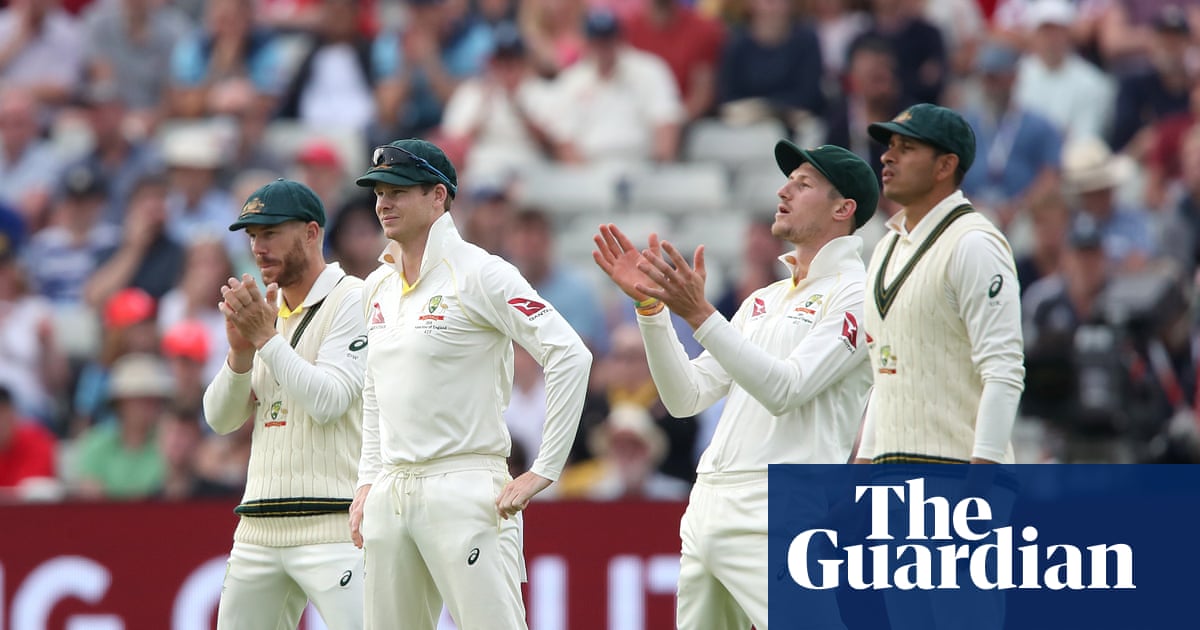
Whistleblowers reporting corruption or misconduct in sport would be protected under draft laws put forward by the Coalition and the Greens, in response to the Australian Test cricket ball-tampering scandal.
The South Africa tour of 2018 is back in the national spotlight after the publication of Usman Khawaja’s autobiography earlier this month, in which he claimed players had used sandpaper to tamper with the ball before the third Test on the infamous tour, and that the entire squad knew about the practice.
The opposition and the minor party have both put forward separate amendments to Labor’s draft legislation that seeks to criminalise particular behaviour that undermine the integrity of sport.
Sign up for Guardian Australia’s Politics, really newsletter here
The government’s bill, first introduced to parliament in August, well before Khawaja’s claims were published, is before the Senate and is expected to be voted on this week.
The Greens leader, David Shoebridge, has called on Labor to establish a dedicated whistleblower protection scheme for sport.
This would accompany an “independent reporting channel” outside sporting bodies and enforceable protection against reprisal.
“Fans deserve to know the games they love are clean, and athletes, coaches and support staff deserve to know they won’t lose their careers for telling the truth,” Shoebridge said.
“We’re calling on parties across the parliament to support this move.”
The Liberal senator Michaelia Cash has also circulated proposed protection for people reporting corrupt conduct.
A whistleblower would qualify for protection if information is communicated to law enforcement, a sporting body, or Sport Integrity Australia and was provided in “good faith”.
A court could also make an order to reinstate a person to their position or one at a comparable level, if they experienced reprisal due to their disclosure.
This covers employees who are expelled or suspended from a club or competition, or are not selected or otherwise removed from a previously held role or in a team, club or competition.
The government’s national sport integrity draft legislation introduces new offences to criminalise certain behaviour, such as the manipulation of a sporting event.
“Recognising that a fair, safe and strong sport sector, free from corruption, is vital to the safety and credibility of sports, their participants, and to Australia’s credibility as a participant in the international sporting arena,” the memorandum of the bill reads.
skip past newsletter promotion
after newsletter promotion
Human Rights Law Centre’s whistleblower project associate legal director, Kieran Pender, said sport is a “missing piece” in Australia’s whistleblowing legal system.
“It is a major integrity gap that people who raise concerns with Sport Integrity Australia or other relevant regulators are not protected,” he said.
“The Albanese government should seize this opportunity to improve whistleblower protections and better support people who expose wrongdoing in sport. That will ensure a fairer game for all.”
Australian cricketers Steve Smith, David Warner and Cameron Bancroft were given significant bans as a result of the ball-tampering scandal.
Warner, Bancroft and reserve bowler Chadd Sayers have publicly supported Khawaja’s account, while current Test captain Pat Cummins refuted the claims in a 70-minute press conference in Sydney.
Cricket Australia has since announced an independent “forum” for players and staff to share their version of events to provide a “circuit-breaker”.