Reactions
The Women's World Cup is coming back to the United States, with FIFA making the announcement on Monday that the U.S., along with Costa Rica, Jamaica and Mexico will be co-hosting the 2031 edition of the tournament.
The 2031 World Cup will mark the first time that 48 teams will compete for the trophy, signifying the immense growth that women's soccer has enjoyed in recent years.
"This is a historic moment for our four countries, but the opportunity is much bigger than any one of us. Together with FIFA, we want to deliver the biggest and most impactful Women's World Cup in history and use its success to accelerate the growth of women's soccer around the world," said U.S. Soccer president Cindy Parlow Cone. "Our ambition is to create a tournament that not only inspires millions of players, but helps give them the opportunities to play, grow and pursue their dreams."
As such, it will have been 32 years since the U.S. first hosted the competition, when Brandi Chastain's iconic celebration capped off an epic run to the title by the U.S. women's national team. (The U.S. hosted the 2003 edition as well due to the SARS pandemic). Suffice it to say, the paths the women's game has trodden since make The Odyssey look like a Sunday cruise.
The U.S. witnessed two domestic leagues go under. Each failure seemed like a death knell for the sport, leaving fans to wonder if there would ever be a viable club competition for the country's best players. Even as the third attempt, the NWSL, struggled to survive, it was deeply wounded by a sex abuse scandal. That outrage left scars that for some won't ever fully heal.
Yet the women's game has been nothing if not resilient. At club level, new investment poured into the NWSL, and with it, a level of stability and media attention that seemed unfathomable a decade ago. The league reported that total regular season attendance rose to 2.5 million. According to Forbes, team valuations now average $200 million.
The developments abroad have been even more encouraging. For the first two decades after that fateful 1999 World Cup, the U.S. was the dominant power. The Americans won four World Cups in total and claimed another four Olympic gold medals following their victory in the inaugural competition in 1996.
As euphoric as those wins were for U.S. fans, it didn't necessarily speak to a healthy competition on a worldwide basis. But eventually, investment in other countries began to increase. Clubs in Spain, England and Mexico dedicated more resources to the women's game, and as a consequence rose up to challenge the sport's traditional powers, including the likes of the U.S., Japan, France and others.
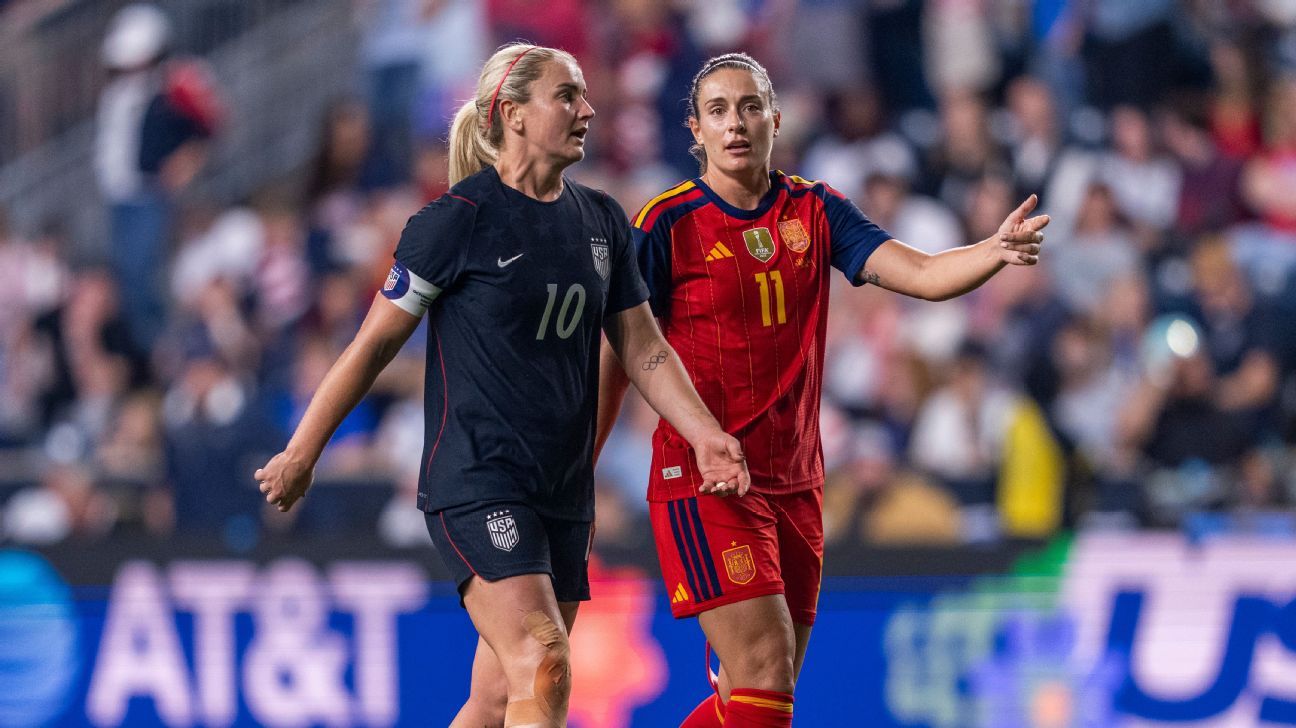
That increase in investment and competition has seen some tangible results. Earlier this year, Club América claimed the Concacaf W Champions Cup, beating Gotham FC and the Washington Spirit along the way. At international level, Spain has assumed the mantle of the best women's national team in the world, claiming its first World Cup in 2023.
The oft-discussed gap between the USWNT and the rest of the world has vanished. Yes, the U.S. claimed Olympic gold again in 2024, but just a year prior exited the World Cup in the round of 16. Claiming the top spot on the podium can no longer be expected like it was in the past.
That has resulted in plenty of introspection in the United States. The college game in the U.S. was once viewed as the gold standard for developing players. Not so now with players elsewhere entering professional environments at younger and younger ages.
This is a healthy development for women's soccer. Steel sharpens steel, as the saying goes, and forcing clubs, leagues and other stakeholders to innovate in order to stay competitive is vital to the sport's overall growth.
That prospect is what makes the next five years so exciting. There are challenges to be sure. The fight for a bigger slice of resources -- from wages to sponsorship to infrastructure -- is never ending, but the trend in terms of gaining a bigger piece of those investments is decidedly upward.
Those benefits look set to extend to the U.S.'s co-hosts. Much like the men's World Cup in 2026, the U.S. figures to host the vast majority of matches, but at the very least, there will more eyeballs and interest in the countries that are co-hosting.
The five-year window before the tournament kicks off provides a lengthy onramp in terms of securing sponsorship and generating interest. On the field, will countries like Colombia, Morocco and Portugal continue to develop and threaten to further upset the status quo?
Women's soccer has navigated a challenging path to get to its current, stable place in the world sporting landscape. Next year's Women's World Cup in Brazil should provide a dose of rocket fuel to help create even more momentum ahead of 2031. Charting the sport's continued growth is something observers of all stripes will look upon with interest.